- Shadow accounting: A powerful approach to fund control
- What is shadow accounting for private funds?
- Why shadow accounting is a framework for control
- Key components of a shadow accounting approach
- NAV and valuation reconciliation
- Management fee and expense verification
- Waterfall and allocation checks
- The modern alternative to manual shadow accounting
- How an integrated platform provides control without duplication
- Frequently asked questions about shadow accounting
- What is a shadow account?
- How does shadow accounting differ for hedge funds vs. private equity and VC funds?
- What is a shadow system in accounting?
What is shadow accounting for private funds?
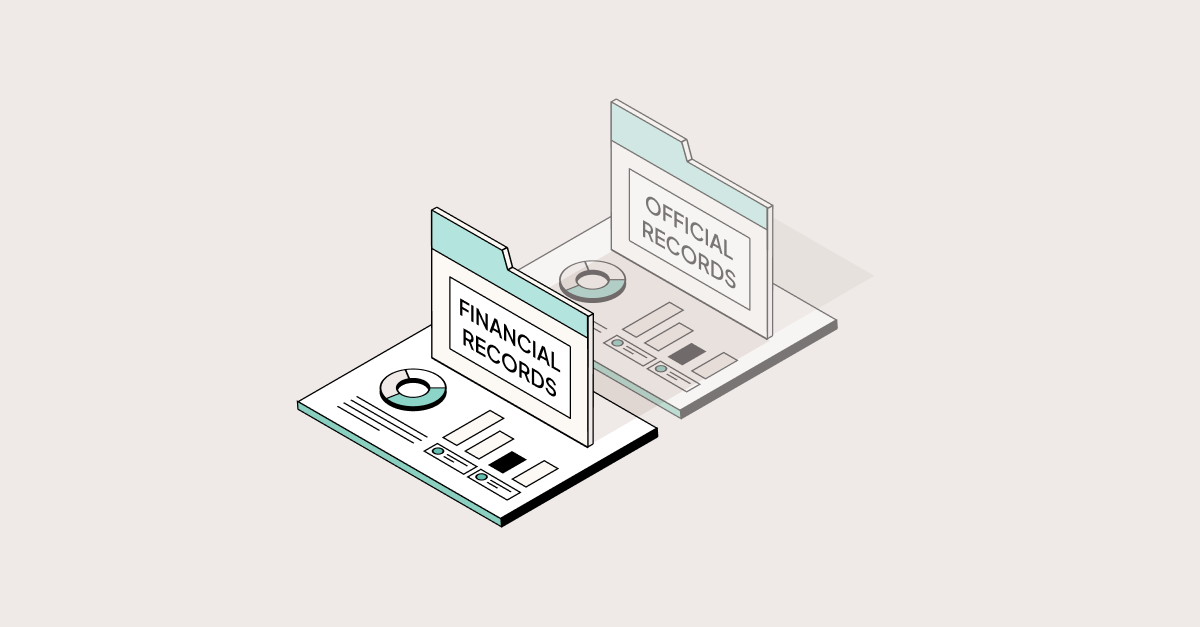
Shadow accounting is the fund accounting practice of maintaining financial records parallel to the official records kept by a third-party fund administrator. This internal general ledger (GL) serves as a mirror to the administrator's books. It allows the fund manager to track activity independently to verify net asset value (NAV), management fees, and distributions for accurate investor reporting.
Shadow accounting functions as an essential accounting control framework to verify that the work of your fund administration accounting service matches the firm's own records and understanding of its financial health—upholding your fiduciary duty to limited partners (LP).
For very large fund managers, it is not uncommon to engage two separate fund administrators—one acting as the primary and the other maintaining the shadow books.
This practice is standard operating procedure for prudent financial oversight in private equity (PE) and venture capital (VC). Institutional investors expect internal controls to verify the work of external providers. By maintaining these parallel records, a general partner (GP) can catch discrepancies early, ensuring the integrity of their financial reporting.
The goal of shadow accounts is to act as a check and balance. This allows the fund's CFO to independently verify the accuracy of calculations performed by their administrator before finalizing reports for investors and auditors.
Why shadow accounting is a framework for control
A fund CFO's primary responsibility is to protect the interests of LPs. When a fund outsources its accounting, the CFO delegates the day-to-day management of the GL, which can create a lack of visibility.
Shadow accounting provides a mechanism to regain that control. It ensures complex transactions are recorded correctly according to the fund's specific strategy. Crucially, the GP retains the ultimate fiduciary responsibility for the fund’s financial statements—and the duty to review and approve the administrator's work—regardless of whether a shadow accounting process is in place. This remains true even for funds that outsource the CFO function itself.

Key components of a shadow accounting approach
An effective oversight model does not require the internal team to re-do every single transaction. Instead, a risk-based approach focuses on independently verifying high-stakes calculations.
For example, calculating the value of unrealized gains in a portfolio is a critical but tricky process. With no single, widely accepted industry standard for marking portfolio companies, the process has become even more uncertain in recent years as private company valuations have fluctuated. For this reason, these are the areas where errors are most likely to occur. This targeted verification ensures efficiency while mitigating the most significant financial risks.
Many firms currently perform this shadowing in Excel, which is notoriously time-consuming and prone to manual errors. A robust process should focus on these specific checks:
Portfolio valuation: Verifying the fair market value of assets. Private assets lack public market prices, making this a high-judgment area where errors are most likely to occur.
Management fees and fund expenses: Ensuring fees align strictly with the limited partnership agreement (LPA).
Waterfall modeling and distributions: Confirming that profit payouts and allocations are precise.
Net asset value (NAV): As the final output of valuations, fees, and waterfalls, the NAV must be reconciled to ensure the fund’s total net worth is accurate before reporting to LPs.
NAV and valuation reconciliation
NAV is the fund's total assets minus its liabilities. This represents the fund's net worth and the value of the LPs' holdings. This figure is the primary metric investors use to judge the performance of their investment and the fund manager. Private assets lack a public market price. Therefore, calculating NAV involves significant judgment and complex portfolio valuation methodologies.
While this review is a standard responsibility for any fund manager, shadow accounting adds a layer of rigor. The team confirms all asset and liability balances on the GL—including cash, accruals, and investments—and recalculates the final NAV per share. This ensures the numbers presented to LPs are verified and defensible.
Management fee and expense verification
The rules for calculating management fees are detailed in the fund's Form ADV and LPA, and ensuring their accurate calculation is a stated priority for SEC examinations. These calculations can be incredibly complex. They often involve changing basis amounts, such as committed capital versus invested capital. They may also involve step-downs after the follow-on investment period concludes.
For example, while committed capital is the common baseline for calculating management fees, the definition of that baseline can vary. Data on special purpose vehicles (SPV) shows that while 70% of SPVs calculate fees based only on capital from outside LPs, another 20% include the GP’s own commitment in the calculation. For a CFO, clarifying this seemingly minor detail is critical, as including the GP’s capital in the fee basis increases the total fees paid by LPs—an amount that can become significant when compounded over a fund's lifespan.
The verification process entails recalculating the management fee based on the specific terms in the LPA for the current period. The internal team must also reconcile all fund-level expenses. This ensures they are properly allocated as partnership expenses (borne by LPs) rather than management company expenses (borne by the GP). This distinction is vital for maintaining the fund's exempt status and ensuring accurate disclosures to investors. Correct allocation is critical for regulatory filings like Form PF and for fulfilling the GP’s fiduciary duty to avoid undisclosed conflicts of interest.
Waterfall and allocation checks
A waterfall analysis of the distribution waterfall is the method for allocating profits between the LPs and the GP. These calculations are governed by complex logic trees defined in the LPA, which can follow different models, such as a “whole of fund” or a “deal by deal” distribution waterfall economic arrangement. They often involve preferred returns, catch-up provisions, and clawback clauses.
This check involves modeling the entire waterfall to confirm that profit allocations and the carried interest calculation are precisely correct before any cash moves. Waterfalls are path-dependent. This means the outcome depends on the J-curve timing and sequence of cash flows. Errors here are difficult to unwind and can result in severe reputational damage. Independent verification is essential for maintaining LP trust and ensuring the GP receives the correct compensation.
The modern alternative to manual shadow accounting
The verification checks described above are critical. However, the traditional way of performing them is inefficient and creates new risks. Historically, shadow accounting meant maintaining a completely separate accounting system. Or, it meant maintaining a massive, disconnected spreadsheet that a controller would manually update.
This “swivel chair” approach to record keeping increases the likelihood of human error, a risk highlighted when SEC staff observed errors in manual waterfall calculations. When processes are complex, mistakes become more common. This “old way” relies on disconnected spreadsheets or a completely separate accounting system for duplicate bookkeeping. It forces highly skilled finance professionals to spend their time on financial statements rather than data entry.
The industry is shifting toward integrated platforms that handle fund administration and back-office overhead, a move that is enabling new market dynamics like the rise of smaller, specialized funds across asset classes. For many emerging managers, these platforms remove the need to build a full admin team.
Feature | Traditional shadow accounting | An integrated platform |
Data source | Separate, manually updated financial records | A single source of truth for all parties |
Process | Manual data entry and periodic reconciliation | Automated workflows and real-time review |
Outcome | Time-consuming, error-prone, and creates data silos | Efficient, accurate, and provides complete transparency |
How an integrated platform provides control without duplication
The modern approach to fund control moves away from maintaining two separate, warring datasets. Instead of forcing a choice between outsourcing and control, modern technology allows for both. It grants the GP direct access to the same underlying data used by the administrator. This eliminates the need for "shadow" books because the GP can view the "primary" books in real-time.
Carta’s solution is built on event-based fund accounting software. This serves as a shared, single source of truth that both the fund CFO and the Carta fund admin team work from. There are no separate sets of books to reconcile at the end of the month. When a capital call is deployed or an investment is marked up, the transaction is recorded once. It is immediately visible to all authorized parties.
Using Carta Fund Financials, a CFO can get the control of shadow accounting without the manual work. They can drill down into any transaction on the GL in real-time to see exactly how numbers are calculated. This provides complete oversight. This transparency allows the finance team to focus on reviewing the scenario modeling logic and strategy behind the numbers. They no longer have to check for data entry errors.
This strategic shift transforms the finance function from a back-office bottleneck into a competitive advantage for private capital managers. For example, Base10 Partners, a technology investment firm, needed faster accounting to make informed decision-making possible and maintain trust with partners. By using a platform that integrates fund administration with their broader data, they turned their back-office operations into a strategic asset that supports their investment thesis.
Furthermore, this unified system streamlines the end-of-year financial audit by providing a single source of truth for increasingly complex equity events. The system is accessible to auditors through a dedicated Auditor Portal. This creates an immutable audit trail that streamlines the entire process and builds confidence with LPs. This accessibility ensures that the "shadow" function becomes a collaborative, transparent review process that satisfies the most stringent blue sky laws and compliance requirements.
To see how Carta’s integrated platform can streamline your fund operations, request a demo.

Frequently asked questions about shadow accounting
What is a shadow account?
A shadow account is a parallel set of financial records maintained internally by a firm. It mirrors the transactions recorded in the official primary account managed by a third-party administrator. Its purpose is to verify accuracy and ensure the firm's internal data matches external reports.
How does shadow accounting differ for hedge funds vs. private equity and VC funds?
The principle of verification remains the same across special purpose vehicles and fund types. However, the frequency differs significantly. Hedge funds often require daily NAV reconciliation due to active trading and secondary market transactions. Continuation funds, PE, and VC funds typically focus on quarterly reconciliations of valuations and capital events.
What is a shadow system in accounting?
A shadow system is any unofficial tool used to track financial data outside of a company's official accounting system. This is most commonly a spreadsheet. It is typically used as a workaround when the main system lacks necessary functionality or transparency.