- Government reopens, but key agencies remain behind
- Topline
- Shutdown ends… not with a bang, but with a whimper
- Tech transfer and sins of omission
- CFPB may need a buy now, pay later plan…for itself
- Senate Ag moves on crypto market structure, while SEC plans crypto taxonomy
- Quick hits
- Sign up below to receive Carta's Policy Weekly Brief
Topline
Government shutdown comes to an end
The fate of SBIR/STTR funding
CFPB may need a buy now, pay later plan…for itself
Senate Ag moves on crypto market structure, while SEC plans crypto taxonomy
Quick hits
Shutdown ends… not with a bang, but with a whimper
After 43 days, Congress ended the shutdown after eight senators broke ranks with Democratic leadership and struck a deal with Republicans to fund the government through the end of January. In the end, cancelled flights heading into the holiday season, questions about food assistance, and missed paychecks for government workers put pressure on a deal. The package guarantees retroactive pay for furloughed workers, reverses layoffs, and includes a promise for a future vote to extend ACA subsidies in the Senate. However, no such action is guaranteed (or expected) in the House. To be clear, the shutdown had no winners. Many people lost, but it is over—at least until January.
What’s next: While the shutdown may be over, its effects will linger for a while.
Agency operations: Agencies face considerable backlogs to restart operations, as applications, filings, and emails have piled up over the past 40+ days. For example, the SEC has indicated it has 900 pending registration statements, and it will likely take weeks to return to normalized operations.
Legislative outlook: The House will get back to business next week after being out for 54 days, with a lot to do in a compressed timeline. Government funding, health care reform, and the annual defense bill are all on the docket. We also expect to see House action on the slate of capital formation bills Carta and our ecosystem partners have been pushing. More to come soon..
Political sentiment: The shutdown saga has increased political tensions across the board. The “deal” has generated backlash in the Democratic party base for failing to secure any concessions, including a fix to extend ACA tax credits—the major issue of contention—at a time when public perception was shifting in their favor. Tensions are also high between Democrats and Republicans in the House, meaning engagement will be even more important to achieve bipartisan consensus on our priorities.
Tech transfer and sins of omission
Another omission from the funding bill: the Small Business Innovation Research (SBIR) and Small Business Technology Transfer (STTR) programs. These programs, which provide non-dilutive funding to early-stage companies, lapsed on September 30, and since Congress has not reauthorized them, they remain shelved.
Both the House and Senate have introduced legislation to reauthorize the programs with reforms that streamline the award process and cap cumulative annual submissions and lifetime award levels—an effort to broaden the reach to more companies, rather than focus it on those that know how to navigate the program. They also seek to limit foreign influence on recipient companies and bolster national security protections. But while the bodies negotiate nuances, the program cannot operate.
What next: Pressure will build, so we expect either a one-year reauthorization that moves in the coming weeks or an amendment to the must-pass year-end National Defense Authorization Act that would reauthorize the programs. SBIR and STTR will be reauthorized, but each day makes a difference for our nation's growth-stage companies and our competitiveness.
CFPB may need a buy now, pay later plan…for itself
The government may have reopened, but the Consumer Financial Protection Bureau (CFPB) may not be open for long. The Trump Administration has declared the CFPB’s funding mechanism—drawing capital from the Federal Reserve—as unlawful, and has barred the Bureau from seeking additional money from the Fed. The CFPB is slated to run out of money in early 2026, which would effectively shutter its operations if this stands. As a reminder, Congress established the CFPB—and its funding mechanism — after the financial crisis as part of the Dodd-Frank Act.
Why it matters: The CFPB’s purview—depending on the administration—can be quite expansive, and does affect the innovation ecosystem. The most obvious example of this came during the Biden Administration when then-Director Chopra leveraged long-dormant authority to expand the CFPB supervisory authority to non-bank entities—including financial technology companies—whose activities the CFPB has reasonable cause to believe pose risks to consumers. This administration is clearly taking the opposite approach, curtailing not only the CFPB’s power, but also its operations.
So why does it matter?
Baby and bathwater: The innovation ecosystem did not support all CFPB actions, but it supported some, such as data sharing under 1033. That rule is being revisited, and pressure from traditional financial institutions may make that outcome less favorable to innovators. It will be critical that our sector shows up to guide its direction to ensure it reflects the innovation agenda.
Volatility: The CFPB took years to get up and running. And although its posture would shift depending on administration, nearly shuttering its operations would be a shift that creates uncertainty. There is opportunity in chaos, but the severe machinations and shifts at the top can make it difficult for industry—and innovators—to understand the rules of the road and how to navigate them.
Power (er, states) abhors a vacuum: As the CFPB likely recedes, expect the state agencies and legal branches to get more aggressive, particularly in Democratic-led states like New York and California. The CFPB worked to collaborate with the states on enforcement actions in the past. But especially post-election, Chopra worked to educate, inform, and empower state agencies to take a more aggressive posture. States have their own consumer protection laws they can enforce independent of federal agencies. California created a “mini CFPB” that has authority to oversee financial products and services offered in the state, including nonbank entities licensed in other jurisdictions.
Net/net: Consumer protection matters. And whether it is led by the CFPB, reattached to the primary banking regulators, or taken up by the states, it will not go away. And that uncertainty and resulting patchwork will impact the innovation ecosystem.
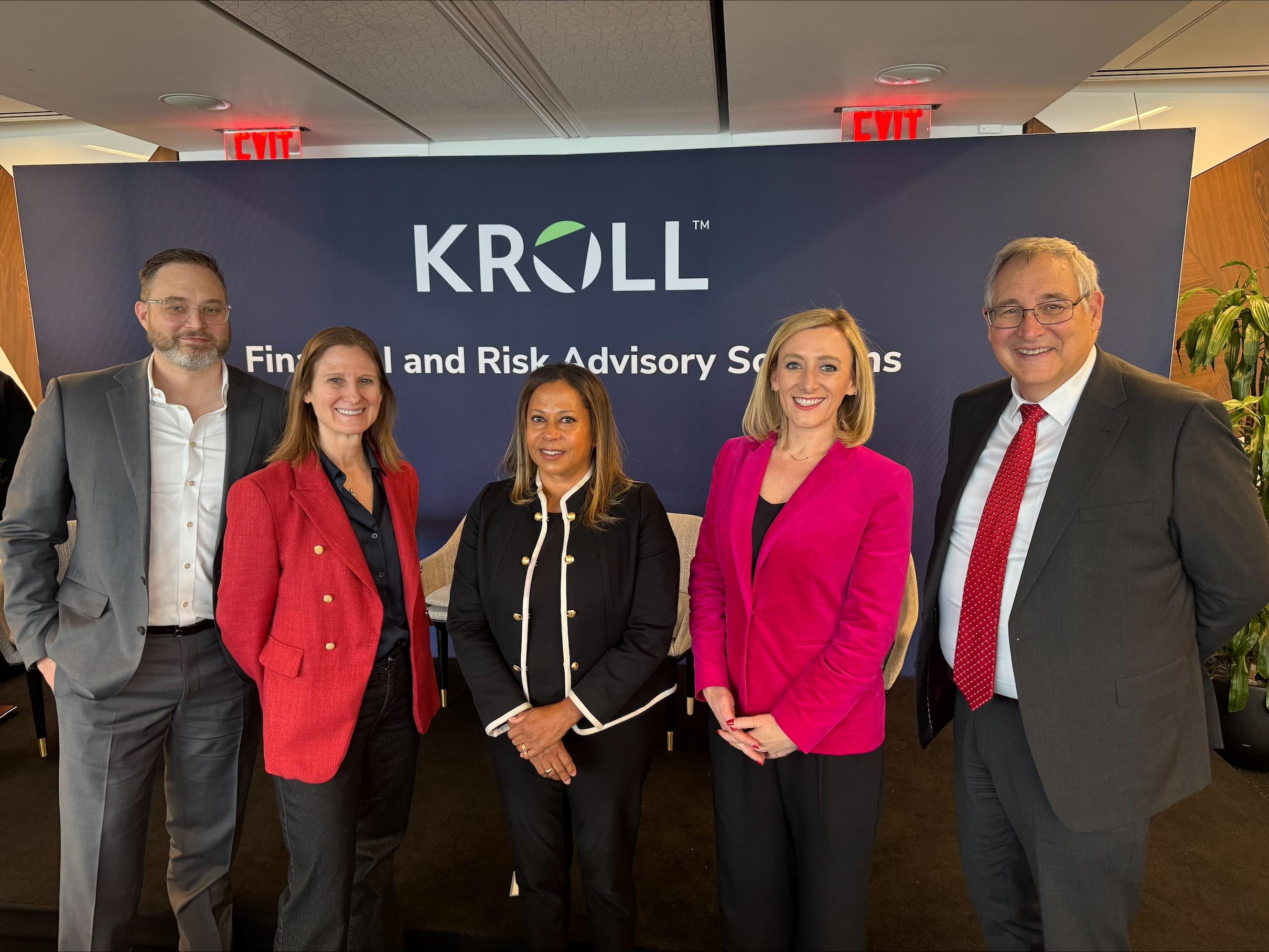
The Carta Policy Team joined a panel of industry experts in New York this week to discuss the democratization of alternative assets and how technology, governance, and valuation are redefining the future of private capital. Thanks to Kroll for hosting such an insightful event.
Senate Ag moves on crypto market structure, while SEC plans crypto taxonomy
The Senate Agriculture Committee released its discussion draft creating a digital asset market structure framework for commodities, complementing ongoing efforts in the Senate Banking Committee on the securities side. The draft would define digital commodities, give the Commodity Futures Trading Commission (CFTC) explicit authority over spot-market trading, and establish registration, disclosure, and customer-protection regimes for those assets. But unlike Senate Banking’s efforts, the Ag Committee draft is bipartisan, enjoying the support of committee leadership. Next week, the Ag Committee will consider the nomination of Mike Selig—chief counsel of the SEC’s Crypto Task Force—to lead the CFTC.
Why it matters: This is positive legislative momentum, but there is a long way to go. Policymakers will need to reconcile the banking and ag provisions—particularly around how to divide jurisdiction, define digital assets across the securities–commodities boundary, and harmonize registration requirements—before a comprehensive package can pass the Senate. Then it will need to be reconciled with the House-passed bill. Another area to watch: CFTC leadership. If confirmed, Selig would be the sole member of the five-person bipartisan commission, and Sen. Cory Booker—the Democratic lead—is pushing to include language to ensure there is a fully constituted commission before crypto legislation moves forward.
Meanwhile, the SEC will continue to drive crypto policy. Chairman Atkins announced plans to push forward with a formal crypto taxonomy, in addition to rulemaking efforts related to token offerings, tokenization, trading, and custody. Proposed taxonomy categories include:
Digital commodities or network tokens: Tokens that derive value from a functional, decentralized crypto system and, in Atkins’s view, are not securities.
Digital collectibles: Tokens designed for collection, usage, artwork, etc. that are not offered with profit expectations from the efforts of others, which are also not securities per Atkins.
Digital tools: Tokens that perform practical functions such as membership, credentials, tickets, which are not securities according to Atkins.
Tokenized securities: Tokens that represent ownership of a financial instrument on a blockchain. And as the name implies, these remain securities. Substance over form is key.
Quick hits
Coinbase heads to Texas. The largest U.S. crypto platform announced plans to leave Delaware and reincorporate in Texas, citing an increasingly unpredictable corporate governance climate. Delaware has long been the standard for U.S. company incorporation, but more business-friendly climates from states like Texas have led to several high-profile departures.
The penny, America’s oldest and most iconic coin in circulation, dies at 232. After more than two centuries, the final penny has been pressed, ending a currency that cost more to mint than it was worth–an estimated savings of $56M per year. So long 99¢ bargains!
Sign up below to receive Carta's Policy Weekly Brief

DISCLOSURE: This communication is on behalf of eShares, Inc. dba Carta, Inc. ("Carta"). This communication is for informational purposes only, and contains general information only. Carta is not, by means of this communication, rendering accounting, business, financial, investment, legal, tax, or other professional advice or services. This publication is not a substitute for such professional advice or services nor should it be used as a basis for any decision or action that may affect your business or interests. Before making any decision or taking any action that may affect your business or interests, you should consult a qualified professional advisor. This communication is not intended as a recommendation, offer or solicitation for the purchase or sale of any security. Carta does not assume any liability for reliance on the information provided herein. © 2026 Carta. All rights reserved. Reproduction prohibited.