Executive summary
For startup founders, raising venture capital represents a type of trade. In exchange for receiving capital that they can use to build a product, hire employees, and jumpstart growth, founders must relinquish some of their ownership, in the form of company equity.
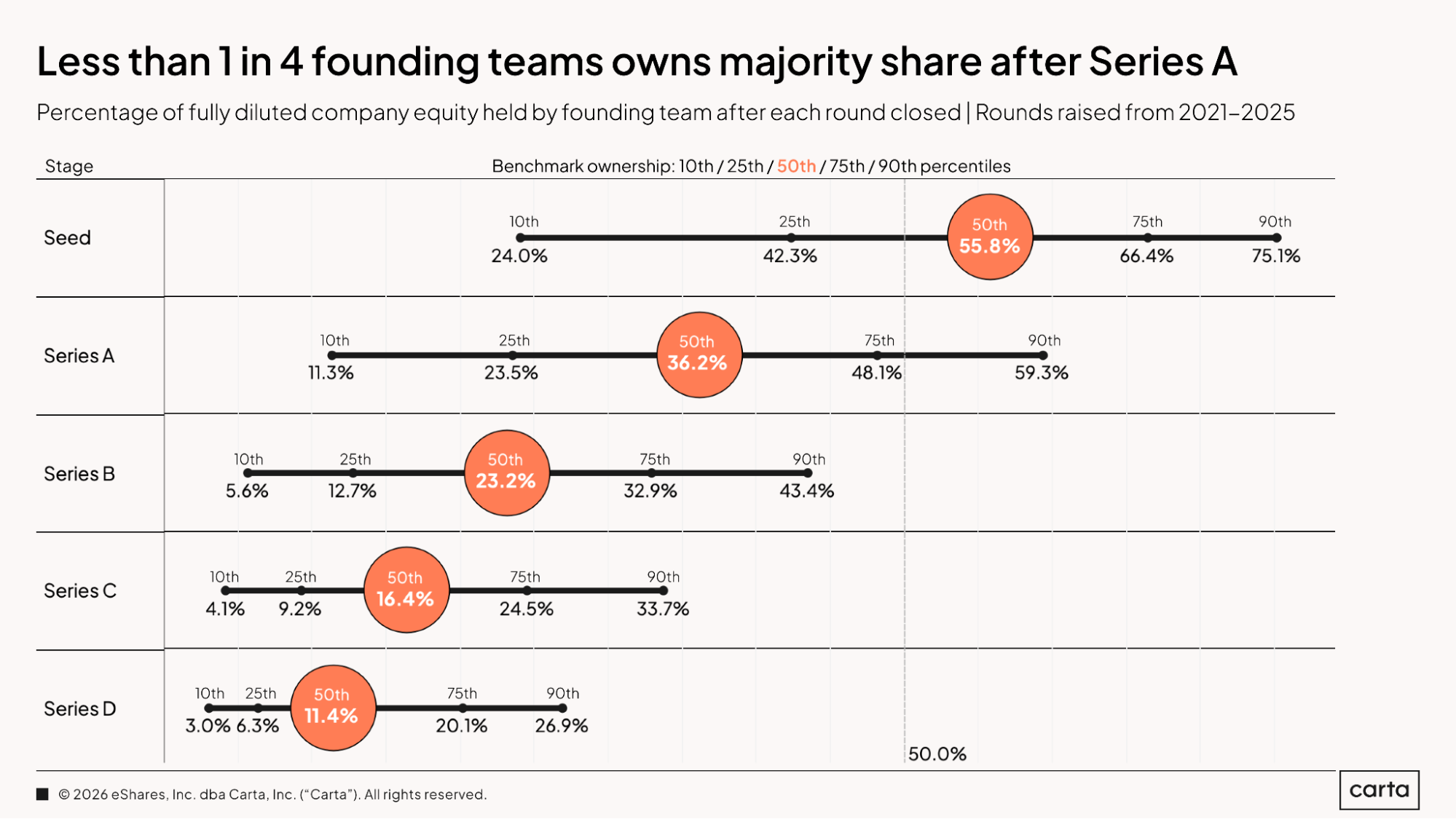
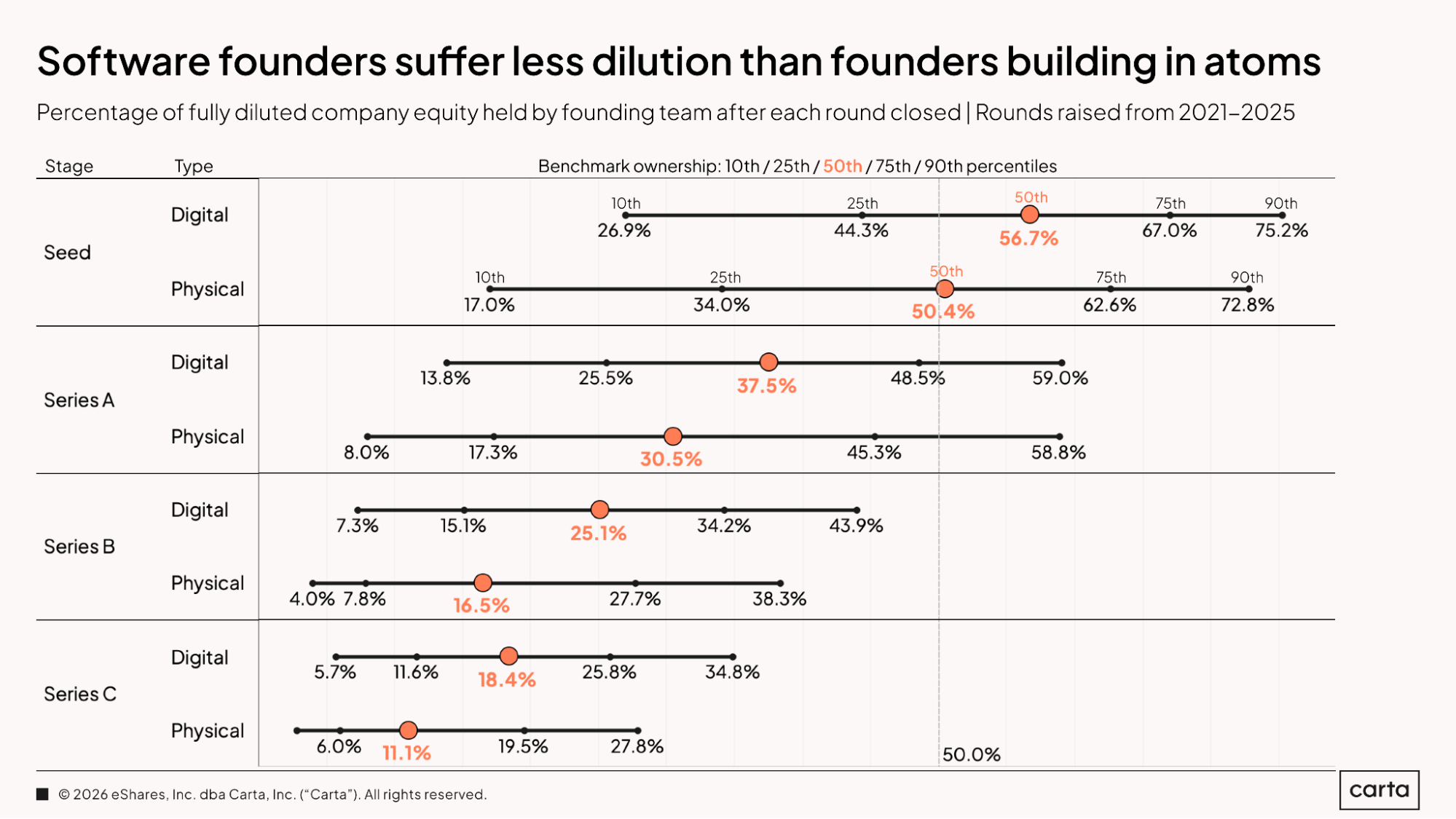
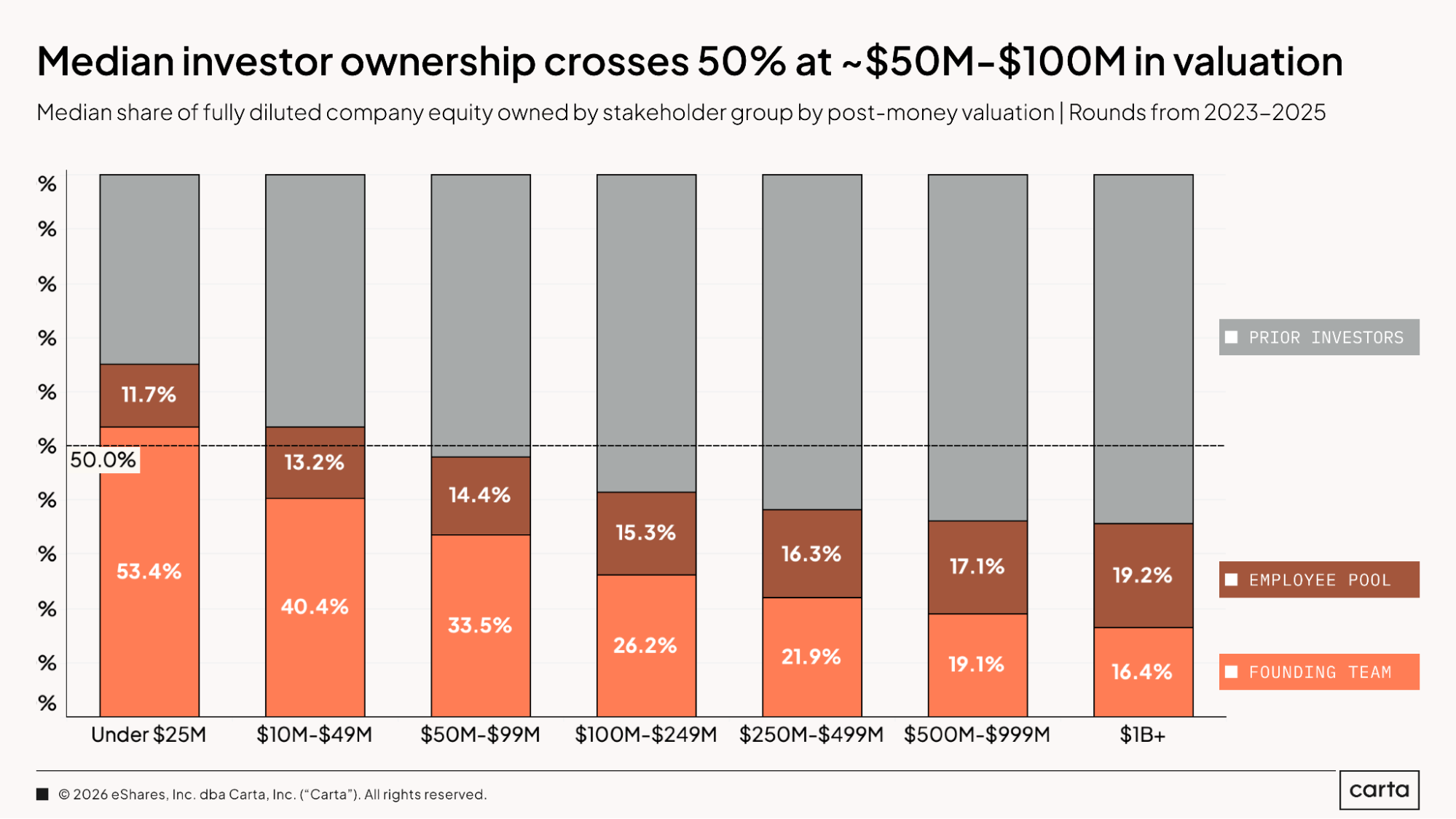
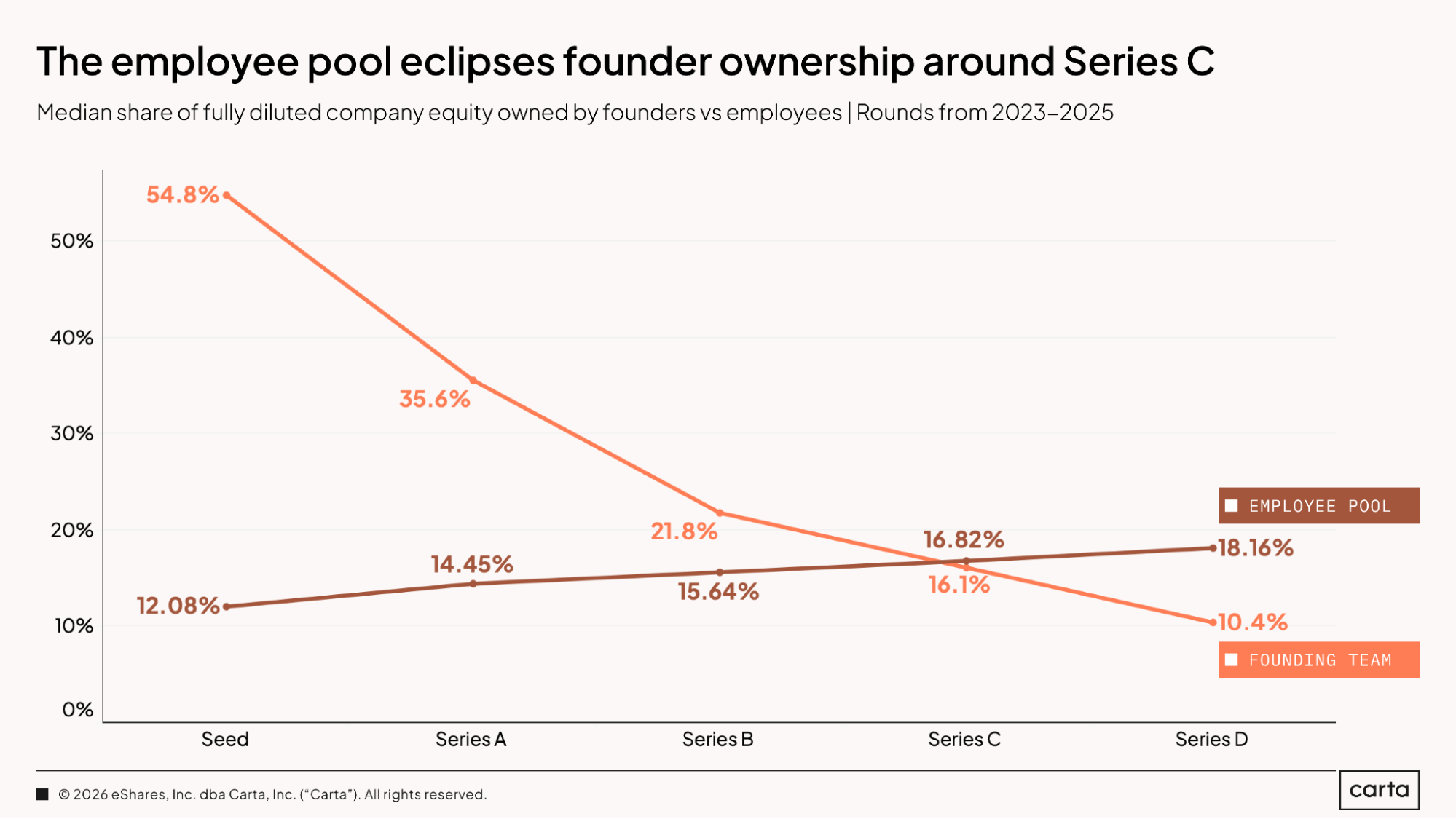
This equity is among a startup’s most precious resources. And they typically spend it rather quickly. By the time a company raises a seed round, the median founding team retains about 56% of their fully diluted equity, based on Carta data on rounds raised from 2021 through 2025. By the time it raises a Series A, median founder ownership declines to 36%.
These metrics can vary significantly by sector. Over the past five years, founders in software and AI typically retain a larger percentage of their company equity than founders in physical and non-AI sectors do at the same stages of growth.
Upon raising a Series A, for instance, the founders of the median startup operating in a digital industry retain 37.5% of their total equity. In physical industries, that rate drops to 30.5%.
At Series B, the median AI founding team maintains 27.3% of their fully diluted equity. The median non-AI founding team, meanwhile, holds a 21.8% stake at that same juncture. This trend holds across all fundraising stages, although to differing degrees.
The bifurcation of the startup world between the most sought-after AI companies and everybody else is perhaps the defining trend of the current era in the venture capital ecosystem, impacting everything from deal counts to exits to valuations. The market for founder ownership is no exception.
Report highlights
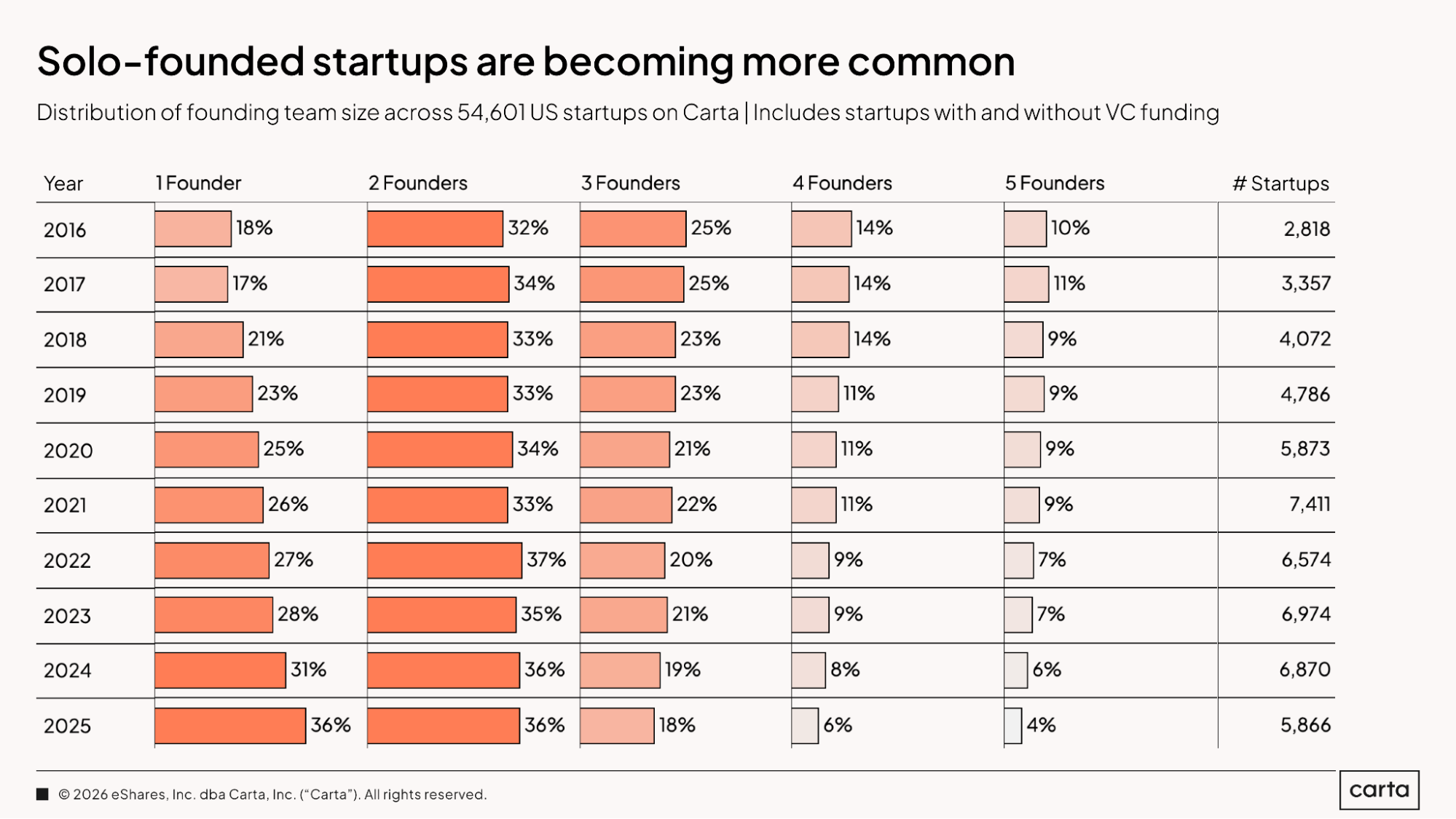
Solo founders are increasingly common: About 36% of startups founded on Carta in 2025 were led by solo founders, a jump from 31% in 2024. Over the past 10 years, the proportion of new startups with solo founders has doubled.
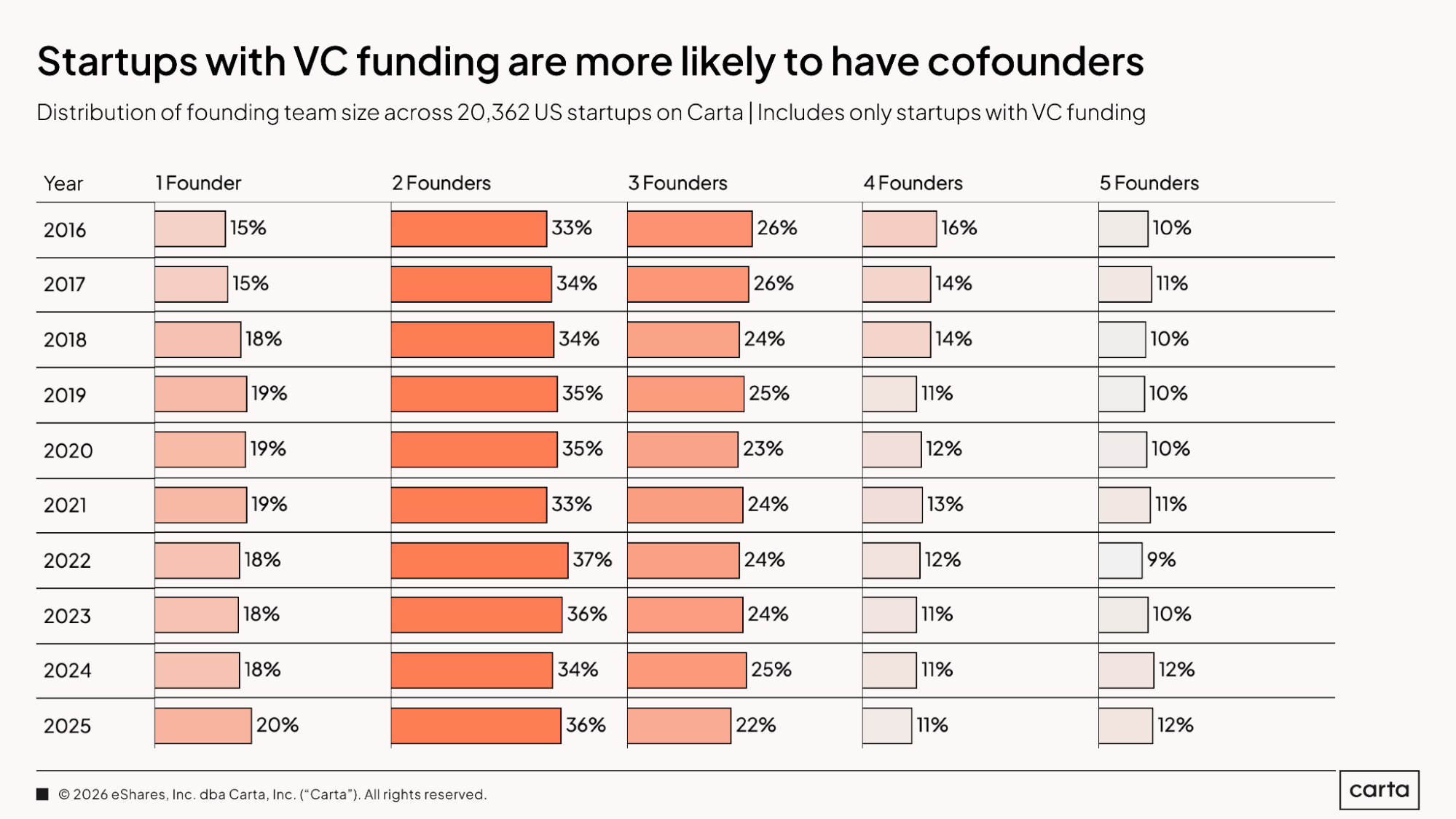
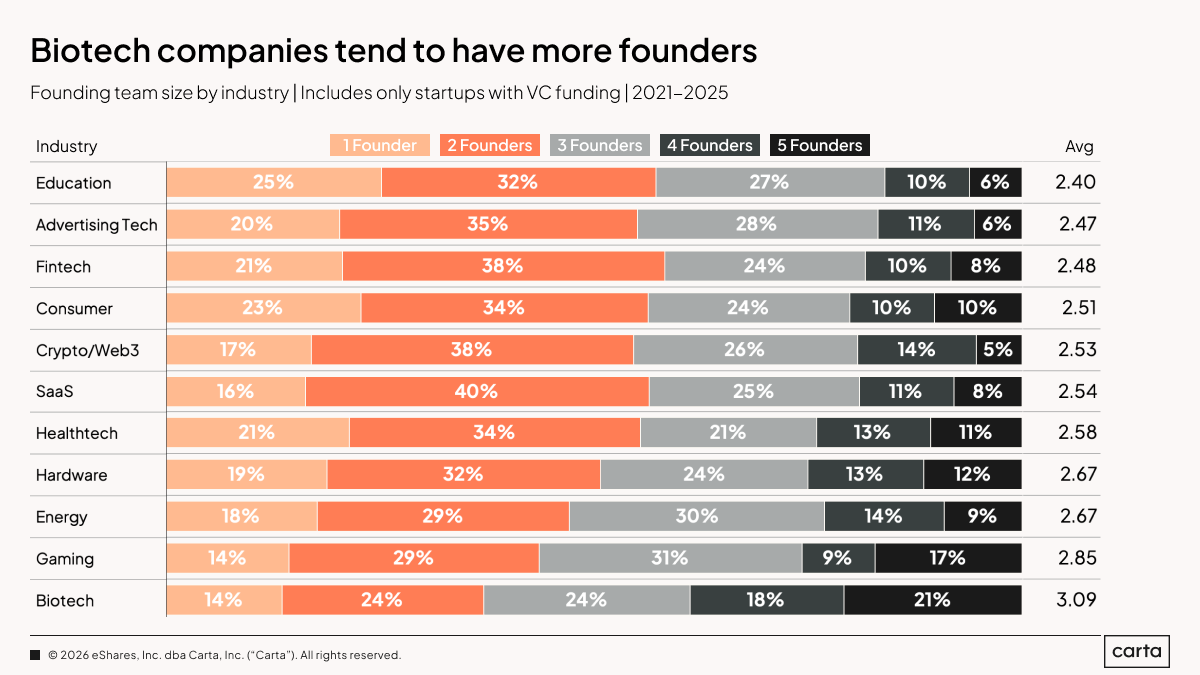
Two-person founding teams are most likely to raise VC funding: Among startups that successfully raise venture funding, however, two-person founding teams are most common. Last year, 36% of startups that closed rounds on Carta had two founders, a rate that rises to 40% in the SaaS industry.
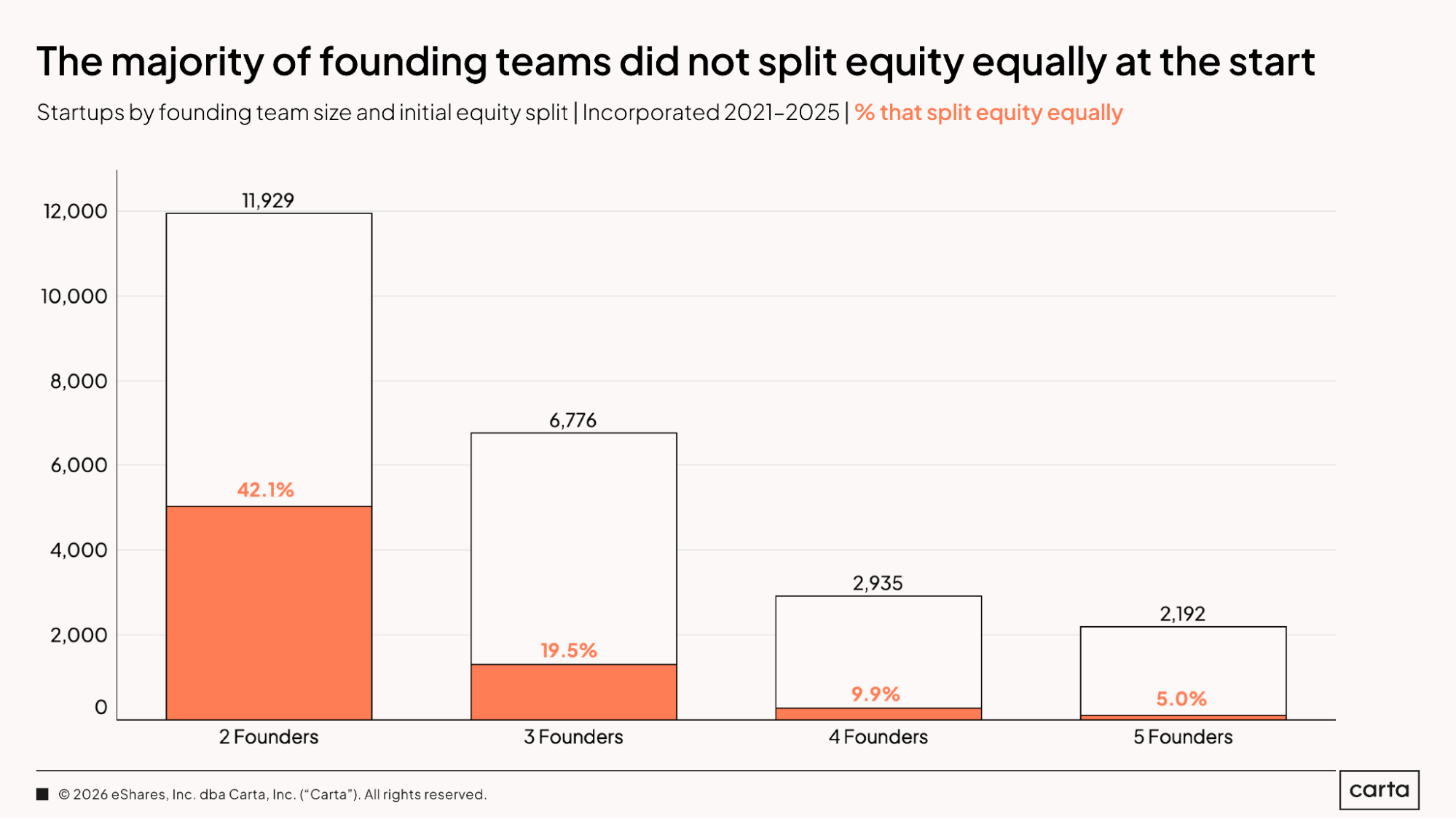
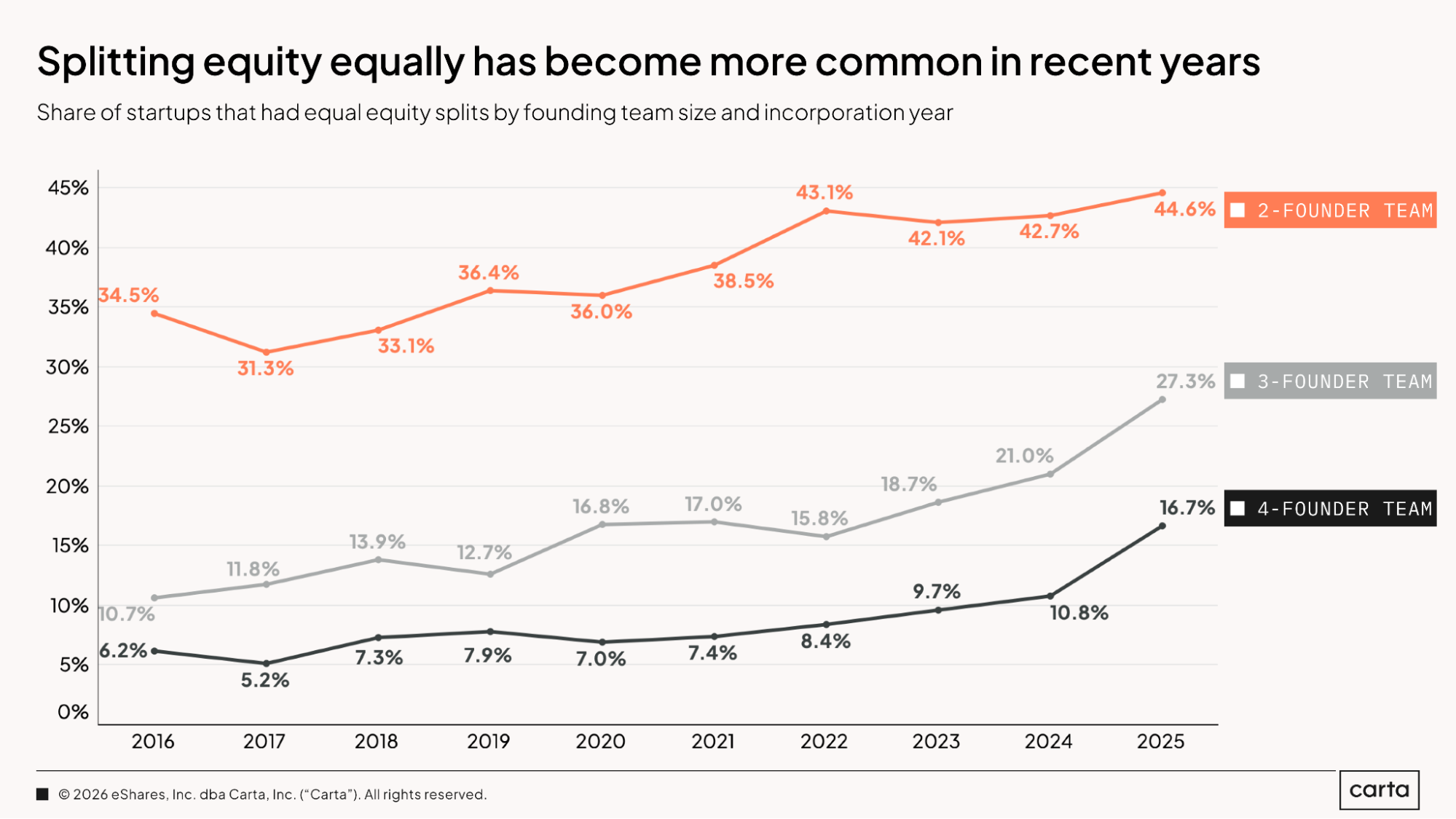
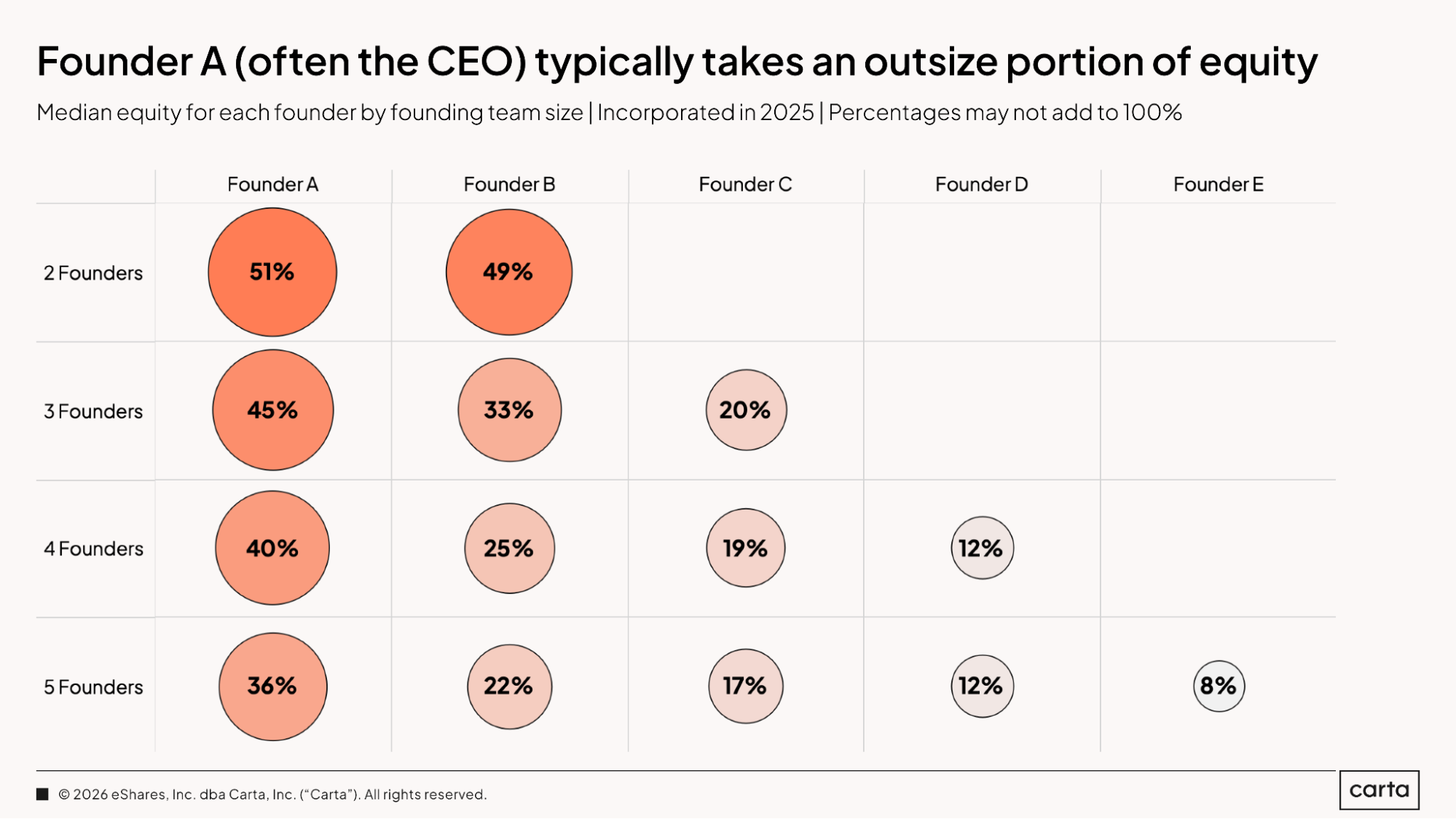
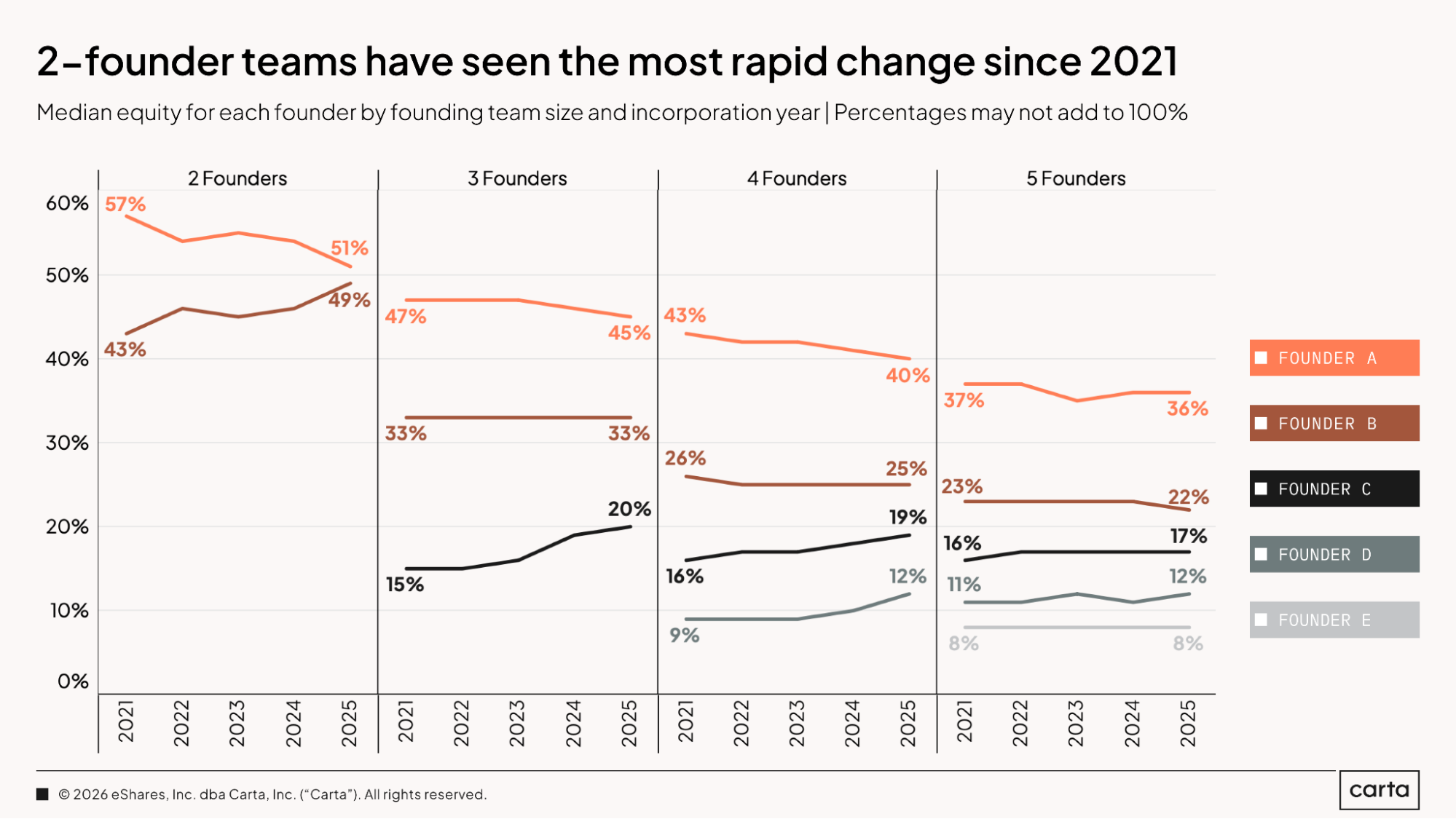
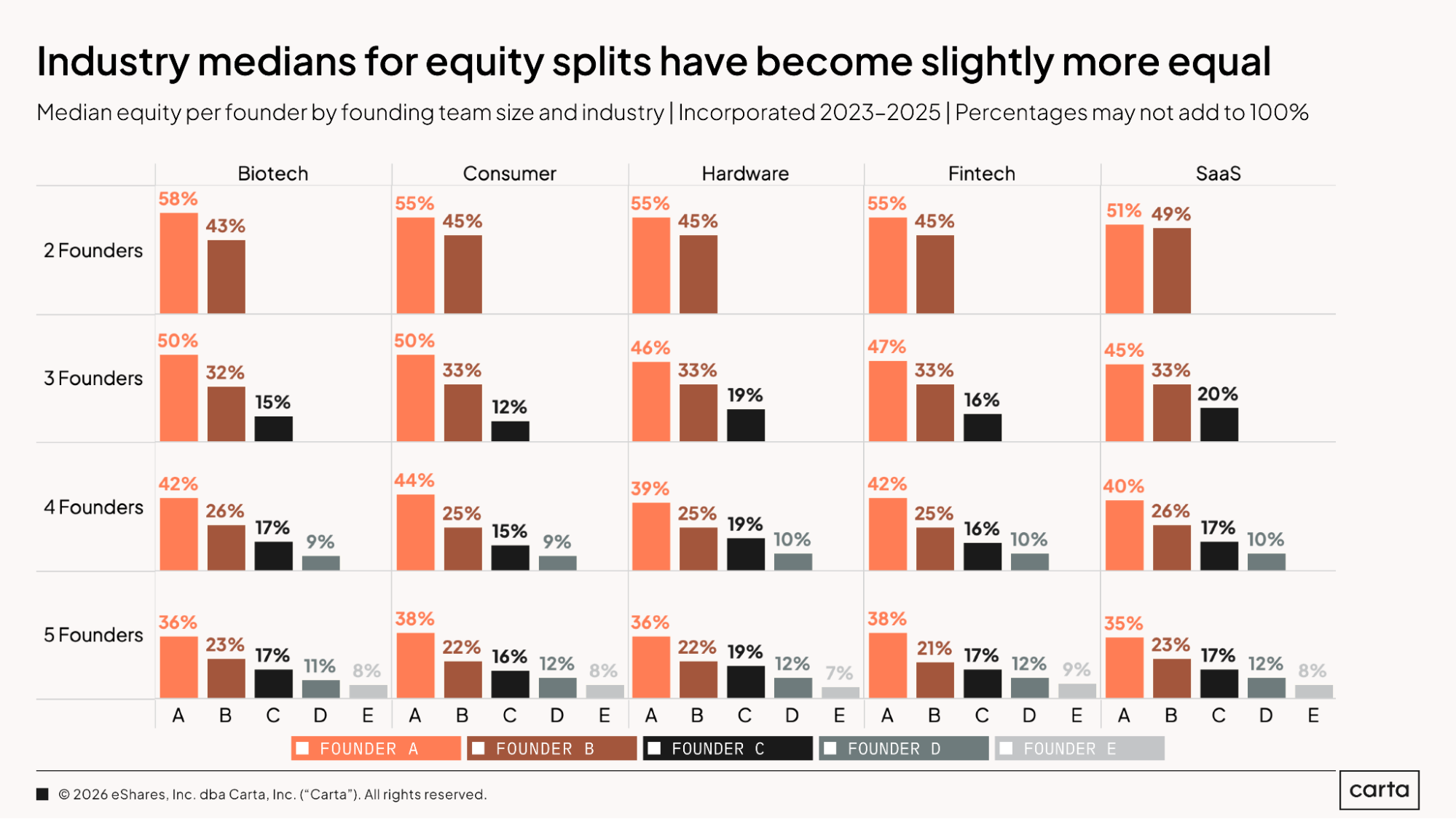
More founding teams are dividing equity equally: Most founding teams with multiple members do not give an equal share of equity to each founder. But the percentage of those who do is on the rise. The rate of even equity splits rose to 27.3% last year for three-founder teams, up from 21% the previous year, and to 16.7% for four-founder teams, up from 10.8%.
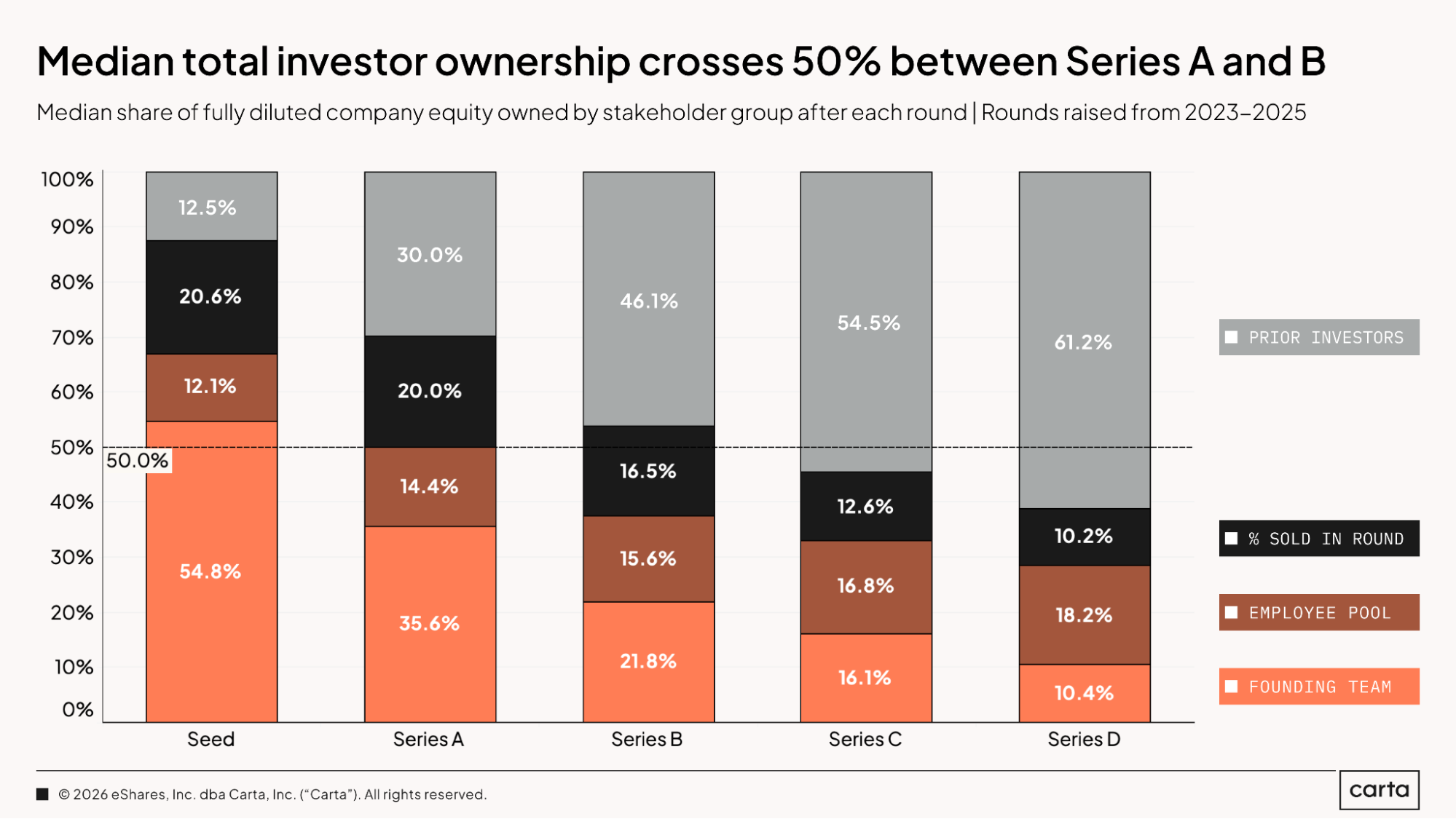
Employee ownership surpasses founder ownership at Series C: At the seed stage, the median founding team still owns more than 50% of their company’s equity, while the median employee pool comprises just 12.1% of equity. Before too long, however, that math flips: At Series C, the median employee equity pool (16.8%) outstrips median founder ownership (16.1%).
Founding team composition
Initial equity splits
Ownership over time
Methodology
Carta helps more than 50,000 primarily venture-backed companies who have combined to raise more than $ 1.2 trillion in equity. We share insights from this unmatched dataset about the private markets and venture ecosystem to help founders, employees, and investors make informed decisions and understand market conditions.
This study uses an aggregated and anonymized sample of Carta customer data. Companies that have contractually requested that we not use their data in anonymized and aggregated studies are not included in this analysis. The data presented in this report represents a snapshot as of January 1, 2026.
Defining a founder
In order to be considered a founder in this analysis, an equity holder had to qualify under each of the following criteria:
Company must be incorporated in the United States
Must be an individual (as opposed to a fund or other entity)
Must hold at least 5% ownership before any venture fundraising has occurred
We excluded companies with more than five founders from this analysis as they made up less than half a percentage point of all analyzed companies.
In the analysis concerning initial equity splits, we included all eligible startups incorporated over the past decade (2016-2025). In the sections regarding ownership at various funding stages and levels, we limited the analysis to companies who had completed primary venture rounds from 2021-2025.