- Fund distributions: Strategies for emerging managers
- What is a fund distribution?
- When do fund distributions occur?
- How to calculate fund distributions: The distribution waterfall
- Understanding waterfall mechanics
- Whole-fund vs. deal-by-deal waterfalls
- How to execute a fund distribution
- Step 1: Model the distribution
- Step 2: Issue the distribution notice
- Step 3: Execute the payment
- Step 4: Update the general ledger
- Strategic considerations for fund distributions
- Cash vs. in-kind distributions
- To distribute or recycle capital
- Communicating distributions to LPs
- Tax implications of fund distributions
- Streamlining distributions with an integrated platform
- Frequently asked questions about fund distributions
- What triggers a fund distribution?
- What is an example of a fund distribution?
- How do distributions impact fund performance metrics?
- How are fund distributions taxed?
What is a fund distribution?
A fund distribution is the process private investment funds, like a venture capital (VC) or private equity (PE) fund, use to return capital and profits to its investors, including limited partners (LP). This is the critical final step in the investment lifecycle, where a successful exit from a portfolio company is converted into tangible returns for LPs. It represents the culmination of a fund manager's work and is the primary way investors realize a return on their investment.
Unlike a simple mutual fund distribution from money market funds, fixed-income bond funds, or exchange-traded funds (ETFs), a private fund distribution is more complex. While public mutual funds often make scheduled payouts from dividend income or interest income, private fund distributions are often irregular. However, private credit and yield-focused funds may offer more regular distributions aligned with interest payments. For equity funds, they are typically event-driven occurrences tied directly to a liquidity event. However, distributions can also stem from income generation (such as interest or dividends) in strategies like private credit.
A fund distribution is a payout that can be made up of two different parts. The first part is a return of the original investment, which is often called a return of capital. The second part is the share of the profits that the fund generates from a successful investment such as when a company in the fund's portfolio is sold or goes public.
When do fund distributions occur?
Because private fund distributions are event-driven, they are not scheduled on a regular calendar or tied to year-end investment income. Instead, they are triggered by a liquidity event, which is a transaction that generates cash or stock proceeds for the fund. For a VC fund or PE fund, this is the moment an investment is successfully realized and converted into a return. For private credit funds, distributions may occur regularly as borrowers pay interest or principal.
The primary liquidity events that lead to a distribution of funds include:
Merger or acquisition (M&A): A portfolio company is bought by another company or PE firm, and the fund receives cash or stock as payment for its shares. This is one of the most common ways a fund exits an investment, and after a two-year decline, 2024 witnessed a rebound in exits, though volumes remained below pandemic-era levels.
Initial public offering (IPO): A portfolio company goes public, and the fund later sells its fund shares on the public market. This allows the fund to liquidate its position over time, subject to market fluctuations.
Secondary sale: The fund sells its stake in a private portfolio company to another investor, such as a secondary specialist. This provides an exit opportunity before a company goes public or is acquired.
Income and interest generation: For private credit or debt funds, distributions are generated through regular interest payments, coupons, or principal repayment from borrowers.
How to calculate fund distributions: The distribution waterfall
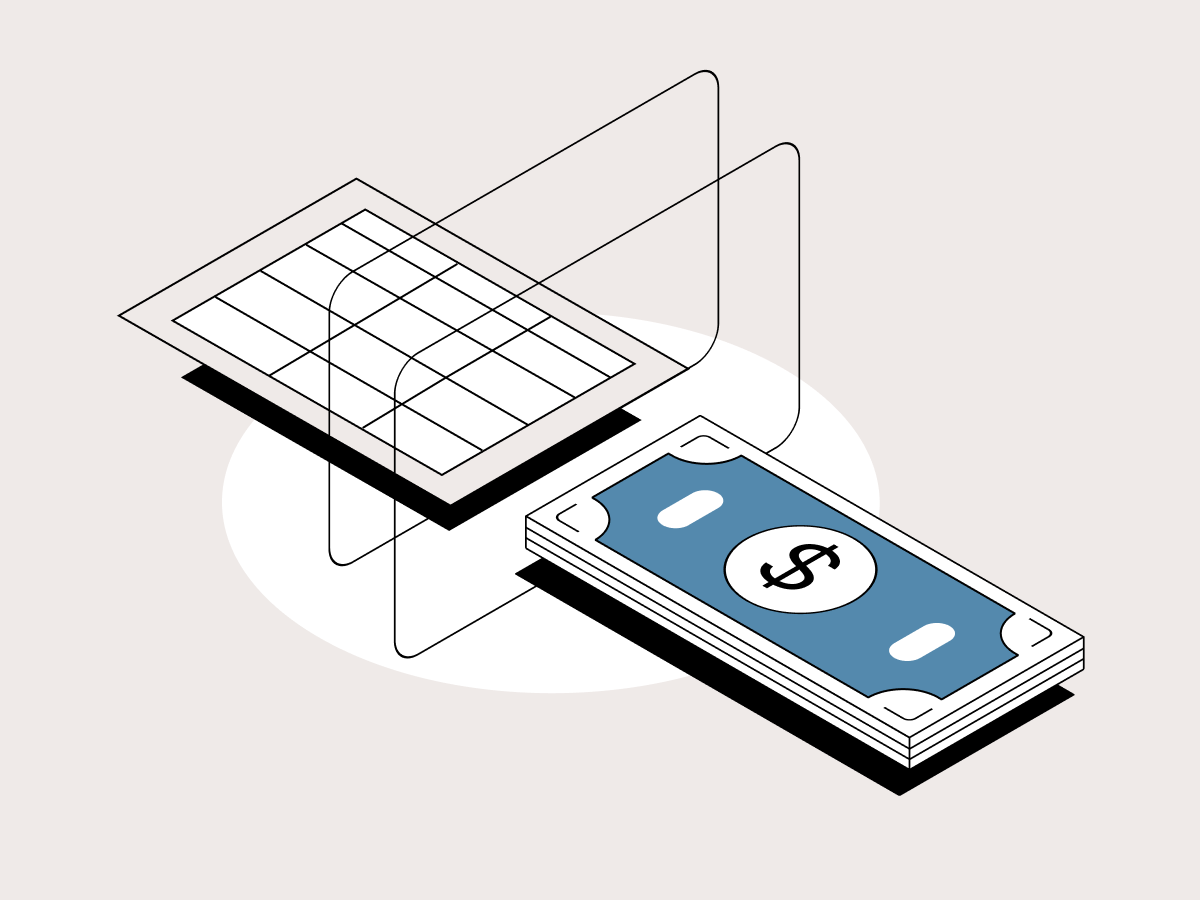
To understand how the money from a successful investment is divided, you need to understand the fund distribution waterfall. It is a structured framework that governs the entire process of how cash is allocated (after settling outstanding liabilities) between the LP, and the fund manager (who operates through a management company), known as the general partner (GP). The waterfall gets its name because the money flows down through a series of steps, filling one bucket before spilling over into the next.
These rules are legally binding and are spelled out in detail in the fund's limited partnership agreement (LPA). The LPA acts as the official rulebook for the fund. Because these calculations can be so complex—especially since cash flows are often only tracked as partnership-level distributions—trying to manage them manually in spreadsheets can lead to significant operational risk and costly errors, which can damage investor trust and create legal liabilities.
Understanding waterfall mechanics
While the specific details can vary from fund to fund, most waterfalls follow a sequence of tiers. This structure ensures that investors receive their initial investment back before the fund manager shares in the profits. The process is designed to align the interests of both the LPs and the GP.
Return of capital: First, all proceeds from a liquidity event flow to the LPs until they have received back their entire initial investment. This is the first and most important step in any distribution.
Preferred return: Next, LPs receive an additional amount until they have achieved a predetermined rate of return, often called the hurdle rate. This ensures investors are compensated for the risk they took.
GP catch-up: After the LPs have been paid their principal and preferred return, the GP receives a "catch-up" distribution. This continues until they have received their full share of the profits, known as carried interest.
Carried interest split: Finally, all remaining proceeds are split between the LPs and the GP according to the agreed-upon ratio. This is commonly an 80/20 split, with 80% going to the LPs and 20% to the GP.
Modern fund administration platforms replace these manual processes. Carta's waterfall modeling software automates these complex calculations directly from the fund's records, ensuring accuracy and providing a clear, auditable trail for every capital distribution. This eliminates the risk of human error and provides confidence in the numbers.
Whole-fund vs. deal-by-deal waterfalls
The waterfall rulebook typically comes in two main styles. Each style has different implications for when and how the GP gets paid their share of the profits.
The first style is the whole-fund waterfall, which is also known as the European waterfall. This approach is generally seen as more favorable to LPs. Under this structure, all the capital that investors contributed across the entire fund must be returned first. Only after all LPs have received their original investment back can the GP begin to collect their share of the profits.
The deal-by-deal waterfall, also known as the American waterfall, is designed to align incentives between investors and management. This model allows for earlier carry payments to the GP, but it can introduce more risk for LPs if the overall fund doesn't perform as well as the initial successful deals.
Feature | Whole-fund (European) waterfall | Deal-by-deal (American) waterfall |
GP carry calculation | Based on the aggregate performance of the entire fund | Calculated on each individual investment exit |
LP capital return | LPs receive their total paid-in capital across the fund before the GP receives carry | LPs receive their capital back for a specific deal before the GP receives carry on that deal |
LP risk profile | Lower risk for LPs, as good deals must cover losses from bad deals before the GP is paid | Higher risk for LPs, as the GP can earn carry on a successful deal even if the overall fund is underperforming |
GP incentive | Aligns GP with overall fund success | Incentivizes GPs on a per-deal basis, allowing for earlier carry payments |
How to execute a fund distribution
Executing a fund distribution involves more than just the calculation; it is an operational process with several critical steps. For a solo GP or emerging fund manager, approaching this process systematically is key to ensuring a smooth and professional execution. A well-managed distribution process reinforces your credibility with investors.
Following a clear playbook can make the process feel manageable and reduce the risk of administrative errors. Each step is important for maintaining compliance and investor trust.
Step 1: Model the distribution
The first action in any distribution is to calculate exactly who gets what from the available cash. This means applying the fund's specific waterfall rules from the LPA to the proceeds generated from the investment exit. This calculation determines the precise allocation amount of the distribution to both returned capital and profit to each LP and the GP.
The biggest challenge here is the high risk of making costly mistakes when doing these complex calculations in spreadsheets. A single formula error or a misplaced decimal can lead to significant misallocations, which can damage investor trust and create legal problems. This is where tools for distributions and waterfall scenario modeling provide a clear solution. Because these tools are directly connected to the fund's general ledger and ownership records, they automate the complex calculations, ensuring accuracy and full compliance with the LPA.
Step 2: Issue the distribution notice
A common headache for fund managers is the time spent answering individual LP questions about notices and payments. The scale of this challenge becomes clear when looking at the number of investors in a typical venture fund. Even funds with less than $25 million in commitments have a median of 27 LPs. For larger funds with $100 million or more in assets, the administrative lift is even greater, as they can have more than 100 LPs to keep informed.
The Carta LP Portal offers a modern solution to this problem. It gives your investors a secure, self-service hub where they can access their notices, see the status of their payments, and review their entire history of contributions and distributions in one convenient place.
Step 3: Execute the payment
This step involves the physical process of moving the money from the fund's bank account to each individual LP, a process that can be streamlined with modern distributions management. In the past, this has been a highly manual and tedious process. It often required a fund administrator to log into a bank portal and initiate individual wire transfers for each investor, a task that is both time-consuming and prone to human error.
A modern, automated workflow completely transforms this step. Carta's fund operations suite streamlines the payment process by connecting the distribution calculation directly to the payment execution. This deep integration eliminates the need for manual data entry, reduces the risk of sending money to the wrong account, and ensures that payments are sent accurately and efficiently.
Step 4: Update the general ledger
The final, essential accounting step is to accurately record the distribution of funds in the fund's official books and records, maintaining a clean audit trail. This ensures that the fund's net asset value (NAV) and financial statements are always current, accurate, and ready for an audit. Any delay or error in this step can compromise the integrity of all future financial reporting and create major problems down the line.
Carta's event-based general ledger automates this process. When you execute a distribution on the platform, the necessary journal entries are created automatically and in real time. This eliminates manual accounting work and ensures the fund’s financial statements always reflect the most current activity. The value of having real-time, accurate data is a strategic advantage, as Jarred Morales-Mckinzie, director of finance at Base10, explains: “Carta provides transparency into all of our data. I can look at any given second and know that it’s up to date in real time, not from three months ago or the last quarter-end.”
Strategic considerations for fund distributions
Beyond the mechanics of calculating and sending payments, you as a fund manager must make strategic decisions about distributions. These decisions can significantly affect LP returns and the overall health of your investor relationships. This is where a fund CFO's role shifts from being a back-office operator to a strategic partner, using tools like fund forecasting to inform decisions.
Cash vs. in-kind distributions
There are two primary types of distributions. A cash distribution occurs when the fund receives cash from the sale of an asset. An in-kind distribution involves transferring stock directly to LPs, which typically happens after a portfolio company’s IPO, a method that has grown in relevance as sponsors leverage alternative exits in response to slower IPO markets.
Each method has different implications for both the GP and the LPs, and the choice depends on the fund's strategy and the preferences of its investors. Understanding these differences is key to making the right decision for your fund.
Distribution type | For the LP | For the GP |
Cash | Simple to receive; no further action required | Straightforward to execute; provides a clean exit |
In-kind (Stock) | Allows for tax planning and potential for future upside if the stock appreciates | Can be more complex administratively but may be preferred by institutional LPs |
The key tradeoff here is between LP flexibility and your administrative workload.
LP control: In-kind distributions give your LPs control over when to sell their public shares. This allows them to manage their own tax timing and investment strategy.
Administrative burden: This method creates a significant administrative challenge for you. You must manage the complex logistics of transferring stock to a large number of individual investors, each with their own brokerage accounts and requirements.
To distribute or recycle capital
When a fund has an early exit, the GP faces a key strategic choice. They can either distribute the proceeds to LPs or reinvest them. Capital recycling is the practice of reinvesting proceeds from an exit back into the fund for new or follow-on investments.
The primary benefit of recycling is that it allows a GP to deploy more than the fund's committed capital. As explained during Carta’s VC Fund Performance webinar, early distributions provide the capital needed for recycling, which can turn a good fund into a great one by fueling the next wave of investments. Without this liquidity, the entire venture ecosystem slows down.
This strategic investment decision requires sophisticated financial modeling. A tool like Carta Fund Forecasting enables GPs to model the impact of recycling on key fund metrics like internal rate of return (IRR) and distribution to paid-in capital (DPI), helping them make data-driven decisions that align with their long-term investment objectives. This allows you to see how different choices might affect your fund's performance over time.

Communicating distributions to LPs
LPs often feel uninformed or find themselves chasing down information, which can strain the relationship. Transparent and professional communication is one of the most powerful tools for building lasting LP trust. With cash returns being the ultimate metric, patience can wear thin amid a dearth of distributions. According to a 2024 Carta analysis, after five years of investing, more than three out of every five VC funds from the 2019 vintage had not yet distributed any capital back to their LPs.
A professional distribution notice is essential. It should include a cover letter explaining the source of the distribution, the total return on the investment, and the amount of carried interest paid to the GP. This level of detail demonstrates competence and transparency, showing your investors you are managing their capital responsibly.
The Carta LP Portal offers a modern solution to this communication challenge. It provides a secure, self-service hub where LPs can receive notices, view their complete distribution history, and access all fund documents with a single login. This creates a differentiated, institutional-grade experience that helps build and maintain investor confidence.
Tax implications of fund distributions
It is a common point of confusion for new investors, but while the distribution of funds itself is a return of capital, the underlying capital gain is a taxable distribution. The fund is responsible for providing each LP with a Schedule K-1 form. This document details their share of the fund's ordinary income, short-term or long-term net capital gains, and losses for the tax year, which they will need for their own income tax filings.
For GPs, tax season can be a stressful, deadline-driven period. Managing the coordination between a fund administrator and a separate tax firm adds complexity and risk. An integrated approach can simplify this process significantly, reducing the administrative burden and the chance of errors.
With Carta Fund Tax, fund accounting and tax preparation exist on a single platform. Because all the necessary financial data is already in one place, Carta can deliver accurate K-1s faster and more efficiently than a fragmented, multi-provider approach. This integration saves time and ensures that your investors receive their tax documents promptly.
Streamlining distributions with an integrated platform
For an emerging manager, an integrated fund administration platform transforms distributions by turning a high-risk, manual process into a streamlined, professional operation for effective asset management. This approach aligns with the view that fund administration should be a strategic function, not just an operational one. The old way of managing funds involved disjointed spreadsheets, a method that struggles to keep pace with the complexity of modern venture capital. For emerging managers with funds between $1 million and $10 million in assets under management, the median vehicle has 26 different LPs, according to 2024 venture fund data. Juggling that many relationships on a spreadsheet creates information silos and significant opportunities for error.
The modern approach centralizes fund operations on a single source of truth, with automated workflows and real-time visibility. This not only reduces administrative burden but also elevates the role of the fund manager, allowing them to focus on strategic decisions rather than manual tasks. As Brian Montgomery, CFO of Legalist, noted, accuracy is paramount. "Other admins build their own systems and they’re full of tiny errors... With Carta, if your inputs are correct, your outcomes are consistent."
See how an integrated platform can help you manage distributions, automate your back office, and deliver a professional experience for your LPs when you request a demo.

Frequently asked questions about fund distributions
What triggers a fund distribution?
A liquidity event (like a sale or IPO) or the collection of income (like interest or dividends) is what triggers a fund distribution, and recent trends show that exit activity has bounced back significantly after a period of decline.
What is an example of a fund distribution?
An example of fund distribution is when a VC fund invests in a startup that is later acquired by a larger company. The fund receives cash proceeds from the acquisition, calculates each investor's share of those proceeds based on the waterfall, and then wires the cash to them.
How do distributions impact fund performance metrics?
Distributions are the primary driver of a key performance metric called distributions to paid-in capital (DPI). This metric, along with residual value to paid-in capital (RVPI), is one of several crucial performance metrics that show LPs the performance of their investment in the fund.
How are fund distributions taxed?
LPs receive a Schedule K-1 from the fund, which reports their share of the fund's income, gains, and losses for tax purposes. The capital gain distribution itself is often a non-taxable return of capital until an investor's initial investment is fully returned.
The capital gain distribution itself is often a non-taxable return of capital (lowering the investor's cost basis) until an investor's initial investment is fully returned. Always seek professional advice to ensure the fund remains tax efficient regarding the applicable tax rate.

DISCLOSURE: This communication is on behalf of eShares, Inc. dba Carta, Inc. ("Carta"). This communication is for informational purposes only, and contains general information only. Carta is not, by means of this communication, rendering accounting, business, financial, investment, legal, tax, or other professional advice or services. This publication is not a substitute for such professional advice or services nor should it be used as a basis for any decision or action that may affect your business or interests. Before making any decision or taking any action that may affect your business or interests, you should consult a qualified professional advisor. This communication is not intended as a recommendation, offer or solicitation for the purchase or sale of any security. Carta does not assume any liability for reliance on the information provided herein. ©2026 Carta. All rights reserved. Reproduction prohibited.