- Carta discusses access to capital, INVEST Act at SEC Small Business Forum
- Topline
- Carta takes the stage at SEC 45th Annual Small Business Forum
- AI’s shifting center of gravity
- Retail meets reality in private markets
- SEC and CFTC discuss the Future of Finance
- Quick hits
- Upcoming events
- Sign up below to receive Carta's Policy Weekly Brief
Topline
Carta takes the stage at SEC 45th Annual Small Business Forum
AI’s shifting center of gravity
Retail meets reality in private markets
SEC and CFTC discuss the Future of Finance
Quick hits
Upcoming events
Carta takes the stage at SEC 45th Annual Small Business Forum
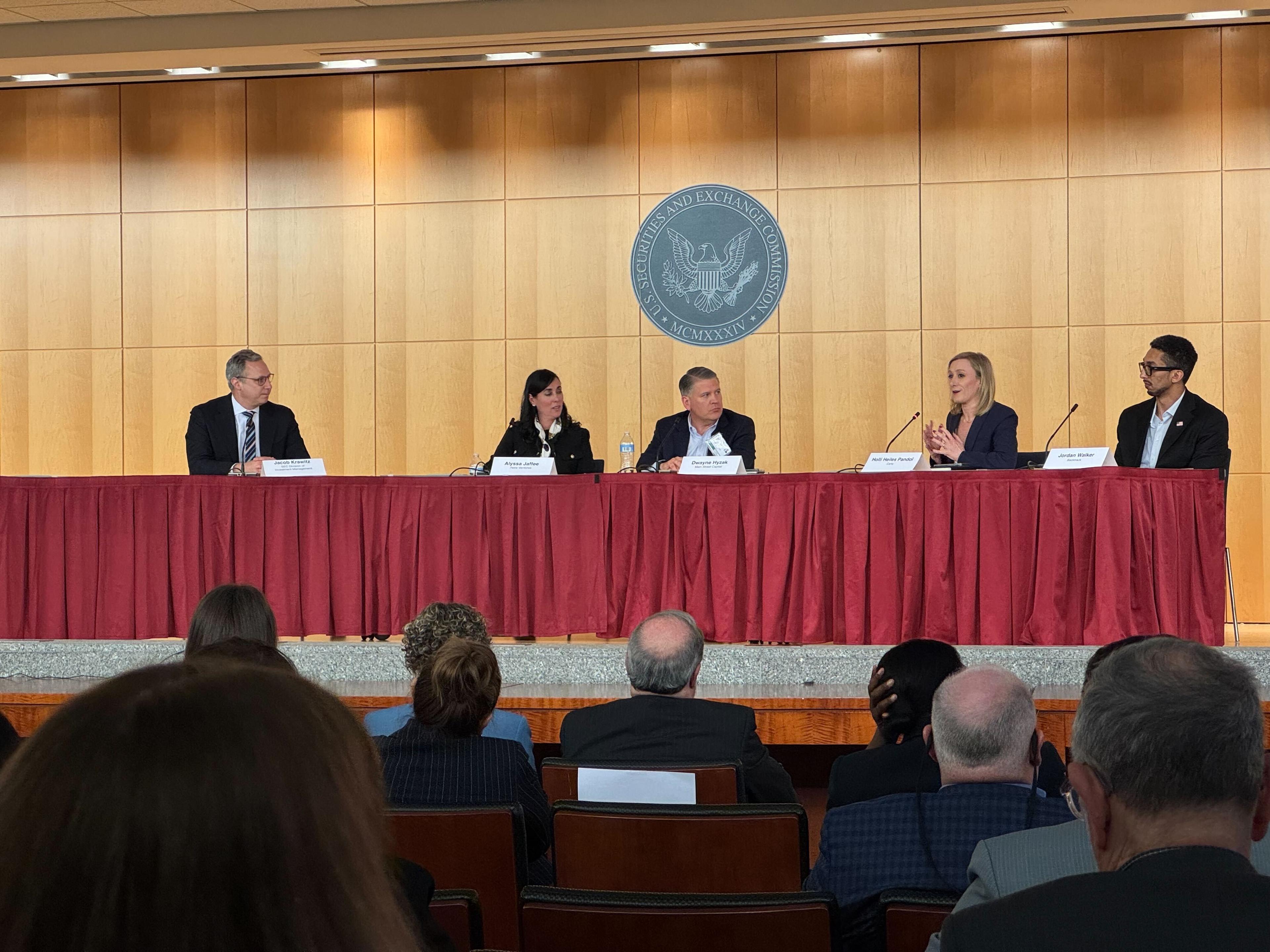
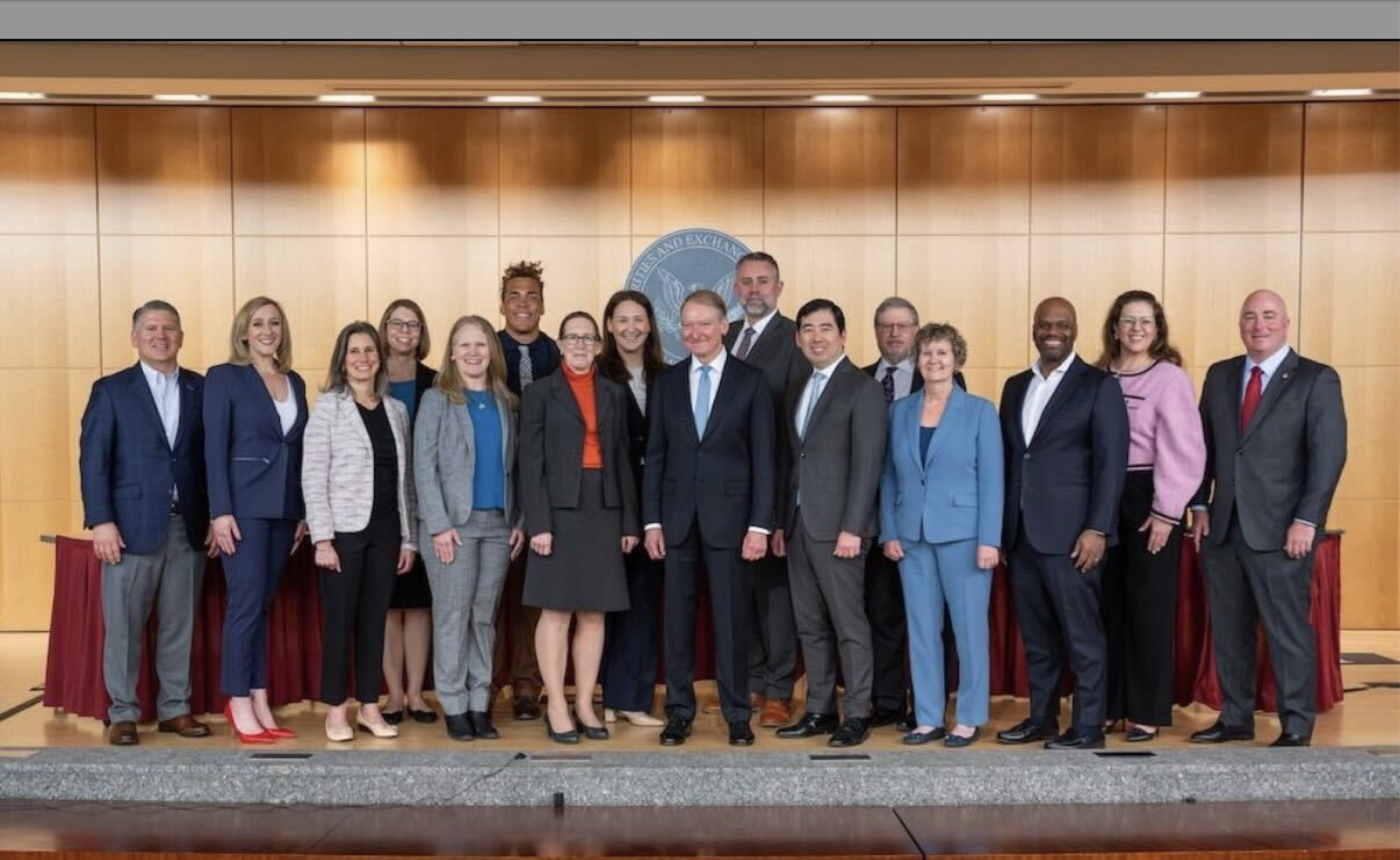
The SEC held its 45th Annual Small Business Forum, bringing together policymakers, founders, and investors to discuss ways to improve capital formation for startups and small businesses. Carta’s Head of Policy, Holli Heiles Pandol, participated on the panel Investing in Innovation: Supporting Growth-Stage Companies and made the case for policies like the INVEST Act that lower barriers and expand access to capital for scaling companies and the investors who support them. But the forum is more than a policy conversation. Each year, participants propose and vote on recommendations that will be reported to Congress, and several bipartisan initiatives have originated from this process. This year’s forum comes at a pivotal moment, with capital formation squarely in the SEC’s agenda and a real opportunity to advance legislation that expands access to private capital and supports the next generation of innovative companies. Carta was proud to participate and share our recommendations.
AI’s shifting center of gravity
The dispute between Anthropic and the Trump Administration continued to escalate over the past week. Federal agencies began offboarding the AI system, and the Pentagon formally designated the frontier AI company a supply chain risk—an unprecedented move for an American company—restricting the use of its Claude model in defense contracts following a failure to come to terms over limits on autonomous weapons and mass surveillance uses. The designation was narrower than earlier signals from the DoW and applies primarily to defense procurement. Major cloud partners including Microsoft, Google, and AWS have confirmed Claude remains available to non-defense customers across their commercial platforms. Anthropic filed suit against the administration to challenge the SCR designation and the presidential directive ordering agencies to stop using Claude.
At the same time, the administration is reportedly developing new federal procurement guidelines for AI vendors, which could require companies supplying the government to permit lawful uses of their systems and disclose modifications tied to foreign regulatory compliance. If adopted, procurement rules could become the federal government’s de facto AI governance framework, shaping deployment standards across the industry long before Congress passes comprehensive AI legislation.
Why it matters: This isn’t just a procurement dispute; it reflects a deeper shift. Frontier model developers are no longer only technology vendors; they are strategic infrastructure embedded in defense systems and intelligence operations, which could reshape how investors, enterprise customers, and governments evaluate vendor risk. The episode also raises foundational governance questions around who ultimately sets deployment boundaries for powerful AI systems—the developer, the government end-user, or Congress. For companies building products on AI infrastructure, particularly those serving government-adjacent markets, the standoff introduces a new layer of commercial and contractual risk that will shape vendor relationships and procurement strategies.
The bigger picture—the shifting economics: Even as the Pentagon dispute dominates headlines, the center of gravity in AI policy is beginning to shift toward the economics of deployment. Policymakers are increasingly focused on two emerging pressure points: energy and labor.
Ratepayer Protection Pledge. The rapid expansion of data centers is driving debates over electricity demand and ratepayer protections. During the State of the Union, Trump announced the Ratepayer Protection Pledge, requiring data center operators to fund their own electricity consumption. Last week, major tech firms participated in an event at the White House to sign the pledge. As residential electricity prices rose 6% last year, the political pressure is real.
Labor displacement. Early signals of AI-driven job displacement are intensifying scrutiny of AI’s impact on the labor market. Anthropic’s CEO has warned that AI could eliminate up to half of all entry-level white collar jobs in the coming years, and the company published a report highlighting the actual and potential disruptions by industry. High-profile layoffs tied to automation and weaker-than-expected jobs data are intensifying the policy conversation. There is also a growing bipartisan push in Congress for better AI workforce data, suggesting that lawmakers are preparing for a more interventionist policy debate over workforce transition, productivity gains, and economic disruption. The emerging policy question is no longer just how to regulate AI systems, but how to manage the economic disruption that widespread deployment may create.
Net/net: As the AI policy debate continues to unfold, the political dynamics around AI may shift away from safety and model governance toward affordability, energy costs, and jobs—issues that resonate far more directly with the broader public. If that trend continues, AI could become a defining economic policy issue heading into the 2026 midterms, shaping debates around infrastructure, labor markets, and U.S. technological competitiveness.
Retail meets reality in private markets
Policymakers are increasingly focused on broadening retail participation in private markets, including through registered investment vehicles and retirement accounts. At the SEC’s March 4 roundtable on private market valuations, Chairman Paul Atkins framed the effort as enabling the “responsible retailization” of private markets while maintaining appropriate investor protections. And the panels reinforced that the SEC is moving deliberately to make it happen. Expect a concept release from the SEC followed by potential:
Adoption of more disclosure requirements for brokers and RIAs advising retail clients on private investments and funds regulated under the 1940 Act holding those investments.
Examination of accounting standards and rules related to valuation of private portfolio holdings.
Updates to the accredited investor standard that prioritize financial sophistication over wealth thresholds alone.
At the same time, recent market developments illustrate the structural challenges involved:
Several private credit funds have recently limited investor withdrawals after redemption requests exceeded quarterly caps, highlighting the inherent liquidity constraints of an asset class built around long-dated, illiquid loans.
Robinhood’s newly listed venture fund, a registered investment vehicle designed to give retail investors exposure to high-profile private startups, stumbled in its public market debut. The vehicle provides liquidity in the fund’s shares, but the underlying portfolio of private companies remains illiquid.
Taken together, these developments underscore a core challenge in the effort to broaden participation in private markets. Expanding access is no longer just a regulatory question; it is increasingly a question of structure, valuation, and investor expectations. Retail investors tend to expect frequent liquidity and transparent price discovery, while private assets operate on long time horizons with limited exit windows and infrequent valuation updates. In credit funds, that tension can appear as redemption pressure. In publicly traded venture vehicles, it can show up as share price discounts to underlying asset values.
Why it matters: Policymakers and market participants increasingly agree that private markets play a critical role in capital formation and long-term economic growth. Expanding access—particularly through retirement accounts and registered investment vehicles—could help more Americans participate in that growth. But the next phase of democratization will depend on building structures that align liquidity, valuation, and investor expectations. As the SEC’s roundtable highlighted, broadening access to private markets is not just about removing barriers; it is also about designing market infrastructure that allows participation to scale responsibly.
SEC and CFTC discuss the Future of Finance
SEC Chairman Paul Atkins and CFTC Chairman Michael Selig appeared together at the Future of Finance 2026 conference to outline joint efforts under Project Crypto. Atkins previewed a regulatory taxonomy distinguishing tokenized securities (which remain under SEC oversight) from digital commodities, collectibles, and certain software tools that fall under the CFTC’s jurisdiction. Selig signaled forthcoming guidance on digital wallets, DeFi protocols, and prediction markets. The CFTC is also expected to clear a path for U.S.-listed perpetual futures in the coming weeks, bringing a derivatives product onshore that has largely traded offshore.
Why it matters: This is a structural shift in how U.S. capital markets may accommodate blockchain-based finance. Atkins framed instant T+0 on-chain settlement, tokenized money market funds, and tokenized bank deposits as early indicators of how blockchain could modernize market plumbing, and the SEC is already advancing these efforts through the DTC tokenization pilot and forthcoming “innovation exemption.” Meanwhile, Selig’s push to onshore perpetual futures, expand eligibility for tokenized collateral, and create safe harbors for software developers aims to reverse the offshore liquidity migration that accelerated under the previous administration's enforcement-first posture. For fund managers, private credit platforms, and digital asset firms, regulatory clarity could unlock product development that has been in limbo.
What’s next: Watch for CFTC guidance on digital wallets and a framework for U.S.-listed perpetual futures, while the SEC continues to formalize a token taxonomy and advance tokenization projects through its exemptive framework. A legislative market structure framework remains the goal, but both agencies are using their existing authorities to advance blockchain-based finance as Congress continues to negotiate the contours.
In related news, the federal banking regulators—the FDIC, OCC, and the Fed—issued joint guidance clarifying that tokenized securities receive the same capital treatment as traditional securities and may qualify as collateral, removing a major operational barrier for banks evaluating digital asset strategies and creating clearer pathways for tokenized collateral, repo structures, and on-chain settlement to move toward mainstream adoption.
Quick hits
No end in sight for stablecoin standoff. Market structure legislation remains stalled in the Senate as negotiations between crypto and banks break down over yield-bearing stablecoins. Exchanges argue rewards are necessary for competitiveness; banks warn they would pull deposits out of the regulated banking system. President Trump publicly sided with crypto in the debate last week, reportedly after meeting with Coinbase CEO Brian Armstrong, but despite increased pressure from the White House, the bill still lacks the votes to advance. Until the yield question is resolved, broader market structure reform is unlikely to move in Congress.
Senate set to advance housing bill with investor ban. The Senate is on the verge of passing its housing reform package, the 21st Century ROAD to Housing Act, which includes a provision that would bar corporations owning more than 350 homes from acquiring additional single-family properties and require large build-to-rent investors to divest after seven years. While the White House supports the bipartisan bill, the provision is facing opposition from the housing industry and the House Financial Services Committee, which warns it could limit housing supply by restricting large-scale build-to-rent investment. As we’ve noted, institutional investors represent a relatively small share of overall home purchases, while the structural drivers of affordability remain unaddressed. The Senate cleared a procedural vote 90–8, but reconciling the bill with the House may prove difficult.
Cap formation and banking reforms advance. The House Financial Services Committee advanced five bills aimed at expanding access to capital across the startup and small business ecosystem. Republicans advanced their community bank regulatory relief bill—the Main Street Capital Access Act—which would raise asset thresholds and lower leverage ratios for community banks, making it easier to extend credit to local businesses. The committee also advanced proposals aimed at improving early-stage fundraising and private market liquidity, including a simplified exemption for seed offerings and legislation to preempt certain state restrictions on secondary trading platforms that meet federal disclosure standards. Together, the measures target multiple points in the capital formation pipeline—from small business lending to startup fundraising and secondary market liquidity. But unlike the INVEST Act, these measures advanced along party lines, making ultimate passage unlikely.
SEC kicks off FSOC AI Innovation Series. Last week, the Financial Stability Oversight Council held the first session of its AI Innovation Series, bringing together financial regulators and industry leaders to discuss strategy and governance principles for AI in financial services. SEC Chairman Paul Atkins framed AI as a market-enabling force that could allow investors to participate with greater confidence, improve capital allocation decisions, and provide regulators with deeper insight into market activity. He highlighted that the SEC’s AI Task Force is already deploying AI across core supervisory functions, including risk assessments, fraud detection, disclosure review, and market surveillance, with humans in the loop. Atkins signaled the agency is taking a technology-neutral approach grounded in existing securities laws, emphasizing the traditional materiality standard rather than prescriptive AI-related disclosure mandates. He and other SEC officials are encouraging market participants to engage with the agency as AI becomes further embedded in the financial market infrastructure.
Upcoming events
Senate Committee on Finance: Hearings to examine the fiscal outlook, 2027-2036 - March 11 at 12:00 p.m. PT/3:00 p.m. ET
SEC Investor Advisory Committee: Meeting on Disclosure Reform, Fund Proxy Voting, and Recommendations on Tokenization of Equity Securities - March 12 at 7:00 a.m. PT/10:00 a.m. ET
House Financial Services Committee Hearing: Updating America’s Financial Privacy Framework for the 21st Century - March 17 at 7:00 a.m. PT/10:00 a.m. ET
House Financial Services Committee Hearing: Revisiting the Treasury-Fed Accord - March 18 at 11:00 a.m. PT/2:00 p.m. ET
House Small Business Committee Hearing: Connecting SBA to Main Street: Examining the SBA Offices of Field Operations and Rural Affairs - March 18 at 7:00 a.m. PT/10:00 a.m. ET
Carta Virtual Event: What’s New, What’s Next: The Connected ERP for Private Capital - March 24 at 10:00 a.m. PT/1:00 p.m. ET
House Financial Services Committee Hearing: Tokenization and the Future of Securities: Modernizing Our Capital Markets - March 25 at 7:00 a.m. PT/10:00 a.m. ET
Sign up below to receive Carta's Policy Weekly Brief

DISCLOSURE: This communication is on behalf of eShares, Inc. dba Carta, Inc. ("Carta"). This communication is for informational purposes only, and contains general information only. Carta is not, by means of this communication, rendering accounting, business, financial, investment, legal, tax, or other professional advice or services. This publication is not a substitute for such professional advice or services nor should it be used as a basis for any decision or action that may affect your business or interests. Before making any decision or taking any action that may affect your business or interests, you should consult a qualified professional advisor. This communication is not intended as a recommendation, offer or solicitation for the purchase or sale of any security. Carta does not assume any liability for reliance on the information provided herein. ©2026 Carta. All rights reserved. Reproduction prohibited.