- Partner capital account statement (PCAP) explained
- What is a partner capital account statement?
- What are the components of a PCAP statement?
- Why are PCAP statements important for fund managers and LPs?
- Common challenges in manual PCAP reporting
- How an integrated platform streamlines PCAP reporting
- Frequently asked questions about PCAP statements
- What happens if a partner’s capital account is negative?
- How is a PCAP different from a Schedule K-1?
- How often should LPs receive PCAP statements?
What is a partner capital account statement?
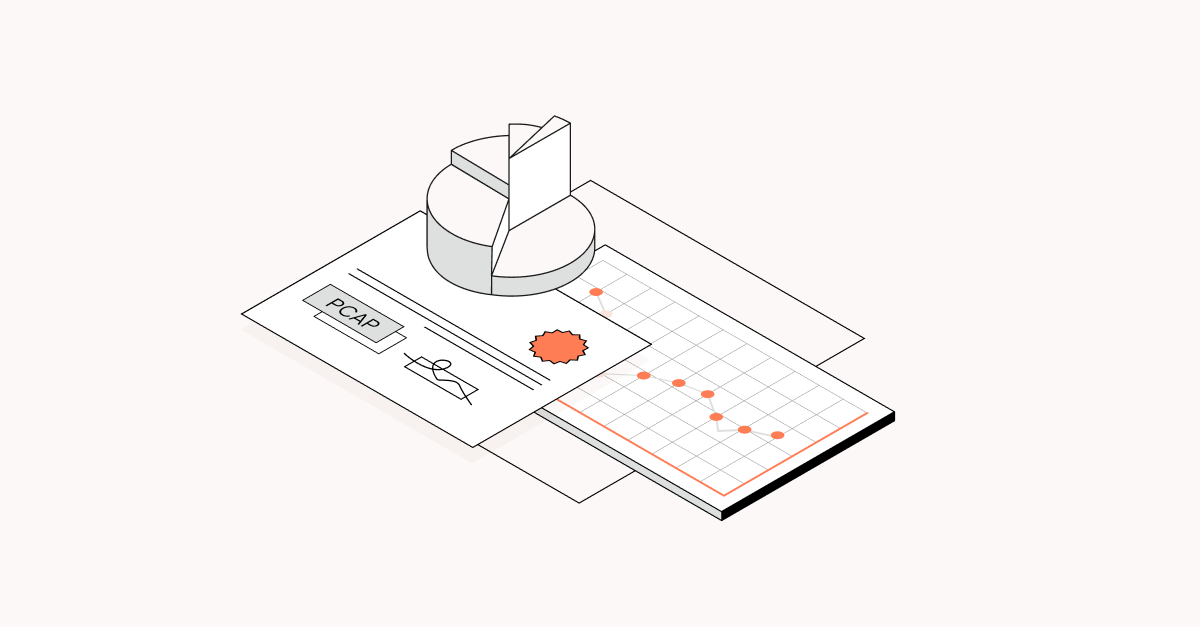
A partner capital account statement (PCAP) is a financial record that tracks a limited partner’s (LP) equity in a private investment fund. It provides a detailed summary of all the financial activity affecting your ownership stake and partnership interest over a specific reporting period, such as a quarter or a year.
This statement is more than just a summary of numbers; it’s a narrative of your capital’s activity within the fund. It shows how your initial investment grows or changes over time due to fund performance and other activities. Understanding this document, which is effectively a statement of partners' capital, is fundamental for any LP who wants to accurately track their stake in a private fund.
It provides a clear, official record of your financial position within the partnership. This transparency is essential for building and maintaining trust between you and the general partner (GP) managing the fund. Think of it as a bank statement for your investment in a fund. For investors in venture capital and private equity funds, the PCAP statement is the primary document for understanding the journey of their investment.
What are the components of a PCAP statement?
A PCAP statement tells the chronological story of your investment from the beginning of a period to the end. Each component builds on the last to provide a complete picture of your capital account, showing exactly how its value has changed.
The statement breaks down the movement of capital into several key parts. These components are universally recognized in fund accounting and standard accounting principles to provide a standardized way for you to interpret your financial position within the fund.
Opening balance: This is your capital balance at the start of the reporting period. Also known as the beginning balance, this amount is the same as the ending balance from the previous period’s statement, providing a seamless continuation of the financial record from one period to the next. It serves as the baseline from which all other activities during the period are measured.
Capital contributions: This represents the amount of new capital you have paid into the fund during the period. This typically happens in response to capital calls from the GP and increases your capital account. A GP issues a capital call when the fund needs money to execute deal flow or cover fund expenses. This is often initiated after the initial contribution made at the start of the partnership.
Allocations of income and loss: This is your share of the fund’s net profits or losses. This includes both realized gains from exited investments and unrealized gains or losses from changes in the value of a current portfolio company (portco). Realized gains are actual profits from selling an investment, while unrealized gains are determined by the fair market value of investments the fund still holds. These allocations are determined by the terms in the fund’s limited partnership agreement (LPA), which acts as the rulebook for the fund.
Distributions: This is the return of capital to you, which can be in the form of cash or stock. Fund distributions typically occur after a fund sells one of its investments and are subtracted from your capital account. This is how you receive the profits from your investment.
Closing balance: This is your final capital account balance at the end of the reporting period. It is calculated by taking the opening balance and factoring in all contributions, allocations, and distributions that occurred during the period, giving a clear snapshot of your equity at that point in time. This ending capital account then becomes the opening balance for the next reporting period.
Why are PCAP statements important for fund managers and LPs?
While the components of a PCAP statement are straightforward, their accuracy is essential for maintaining trust and alignment between fund managers and their investors. These statements are the foundation of transparent investor reporting and are essential for both sides of the partnership to have a shared understanding of fund performance.
For both GPs and LPs, the PCAP statement serves as an important reference point throughout the life of the fund. It validates financial activities and ensures all parties are aligned with the economic terms agreed upon in the LPA. This document is the primary tool for financial communication within the fund structure.
For fund managers: Accurate PCAP statements are essential for demonstrating sound fund management and transparency. They serve as the official record for fulfilling the economic terms of the LPA, ensuring compliance with regulations, and providing the foundational data needed for partnership tax documents like the Schedule K-1.
For investors: PCAP statements provide you with a clear, auditable view of your investment’s performance, and modern software is designed to enable robust, timely and transparent reporting and analysis. You can rely on these documents to verify complex calculations like management fees and carried interest are applied correctly and to support fund forecasting regarding the overall health of your capital. This level of detail empowers you to make informed decisions and maintain confidence in the fund manager's stewardship of your investment.

Common challenges in manual PCAP reporting
The traditional, manual approach to fund accounting often involves finance teams relying on disconnected spreadsheets—which can leave data scattered across inboxes and third-party advisors with no shared source of truth—to prepare PCAP statements. This method is prone to human error, such as incorrect formulas or data entry mistakes, which can lead to inaccurate allocations and require painful restatements.
This creates friction and erodes the trust that is so important in investor relations. A single mistake in a spreadsheet can have a domino effect, leading to incorrect balances and distributions that are difficult and time-consuming to correct.
This inefficiency is especially acute during the stressful, time-consuming quarterly reporting cycle, as the manual collection of quarterly KPIs and financial documents creates significant operational burden. As a result, fund CFOs can get stuck reconciling data from multiple sources instead of focusing on strategic analysis that could benefit the fund.
The manual process introduces several key risks:
Data integrity: Manually moving data between systems increases the chance of errors, which can compromise the accuracy of the entire statement.
Version control: Without a central system, it's easy to work from an outdated spreadsheet template, leading to inconsistencies and confusion—a common challenge when moving from spreadsheets to a single source of truth.
Lack of audit trail: Spreadsheets don't provide a clear, unchangeable audit trail of who made changes and when, which complicates audits and compliance checks.
The risk of errors not only complicates audits but can also damage the firm's reputation with its LPs, undermining the very foundation of trust the relationship is built on.
For firms like Kapor Capital, having access to clear reporting is a primary concern. The firm noted that with a previous provider, “there weren’t great insights or metrics” and the platform lacked an “easy-to-use layout,” which was a big reason it sought a better solution. Reliable PCAPs help GPs build a track record of credibility to make future fundraising easier.
For LPs, the way a fund manager marks portco valuations is a key test of that credibility. These marks have grown more uncertain in recent years, and LPs are paying close attention, with some showing an increasing demand for more frequent reporting. As one investor puts it, LPs will "question your credibility if you’re trying to mark things up in a way that’s too aggressive."
How an integrated platform streamlines PCAP reporting
A unified fund administration platform transforms investor reporting from a manual, error-prone task into an automated, reliable workflow. By centralizing all fund activity, modern software provides a single source of truth that eliminates the reconciliation headaches and risks associated with spreadsheets, while a unified platform centralizes data and connects LPs and GPs across every workflow. This creates more efficient workflows that accelerate the entire fund lifecycle.
This means LPs are getting returns sooner. With modern fund administration, some funds are returning capital sooner than in previous cycles; for the 2023 vintage, nearly 25% of funds had begun distributing capital to LPs by the end of 2025.
This technology-driven approach introduces an event-based general ledger (GL). On a platform like Carta, every fund transaction—from a draw on a capital call line of credit to a distribution—is automatically recorded on the GL. This ensures the data flowing into the PCAP statement is always accurate and up-to-date, providing unparalleled confidence in the numbers.
For firms like Base10 Partners, this shift is transformative, allowing it to turn fund administration into a strategic advantage by ensuring speed and accuracy in its accounting. An integrated system connects all the dots, from bank transactions to investor updates, in one place.
Manual PCAP preparation | Automated PCAP preparation |
High error risk from manual data entry | Low error risk with automated validation |
Time-consuming and resource-intensive | Significantly faster reporting cycles |
Difficult version control with multiple files | Centralized, single source of truth |
Manual updates risk outdated disclosures | Automated updates ensure regulatory compliance |
This streamlined process ultimately improves the investor experience, helping fund managers deliver a world-class LP experience with every report. With a dedicated solution like the Carta LP Portal, you get a secure, on-demand view of your PCAP statements and other fund documents. This fosters a new level of transparency and confidence, strengthening the relationship between you and your GP.
To see how Carta’s platform can streamline your PCAP reporting, request a demo.

Frequently asked questions about PCAP statements
What happens if a partner’s capital account is negative?
A negative capital account balance can occur when cumulative distributions and allocated losses exceed a partner’s total contributions and allocated profits; the specific consequences depend on the terms outlined in the fund's partnership agreement.
How is a PCAP different from a Schedule K-1?
A PCAP statement is a financial report showing the change in a partner’s equity for investor-level reporting, while a Schedule K-1 is an IRS tax form that reports the partner's share of the fund's annual financial results for their tax return. Tax basis capital accounts are specifically used for tax reporting purposes on the K-1, whereas PCAPs may use different reporting standards such as GAAP.
How often should LPs receive PCAP statements?
LPs should typically receive a PCAP statement quarterly as part of the fund’s standard portfolio monitoring package, which provides a regular update on their investment’s performance and standing.

DISCLOSURE: This communication is on behalf of eShares, Inc. dba Carta, Inc. ("Carta"). This communication is for informational purposes only, and contains general information only. Carta is not, by means of this communication, rendering accounting, business, financial, investment, legal, tax, or other professional advice or services. This publication is not a substitute for such professional advice or services nor should it be used as a basis for any decision or action that may affect your business or interests. Before making any decision or taking any action that may affect your business or interests, you should consult a qualified professional advisor. This communication is not intended as a recommendation, offer or solicitation for the purchase or sale of any security. Carta does not assume any liability for reliance on the information provided herein. © 2026 Carta. All rights reserved. Reproduction prohibited.